

Why Use Marine Airbags for Ship Launching in Shipyards?
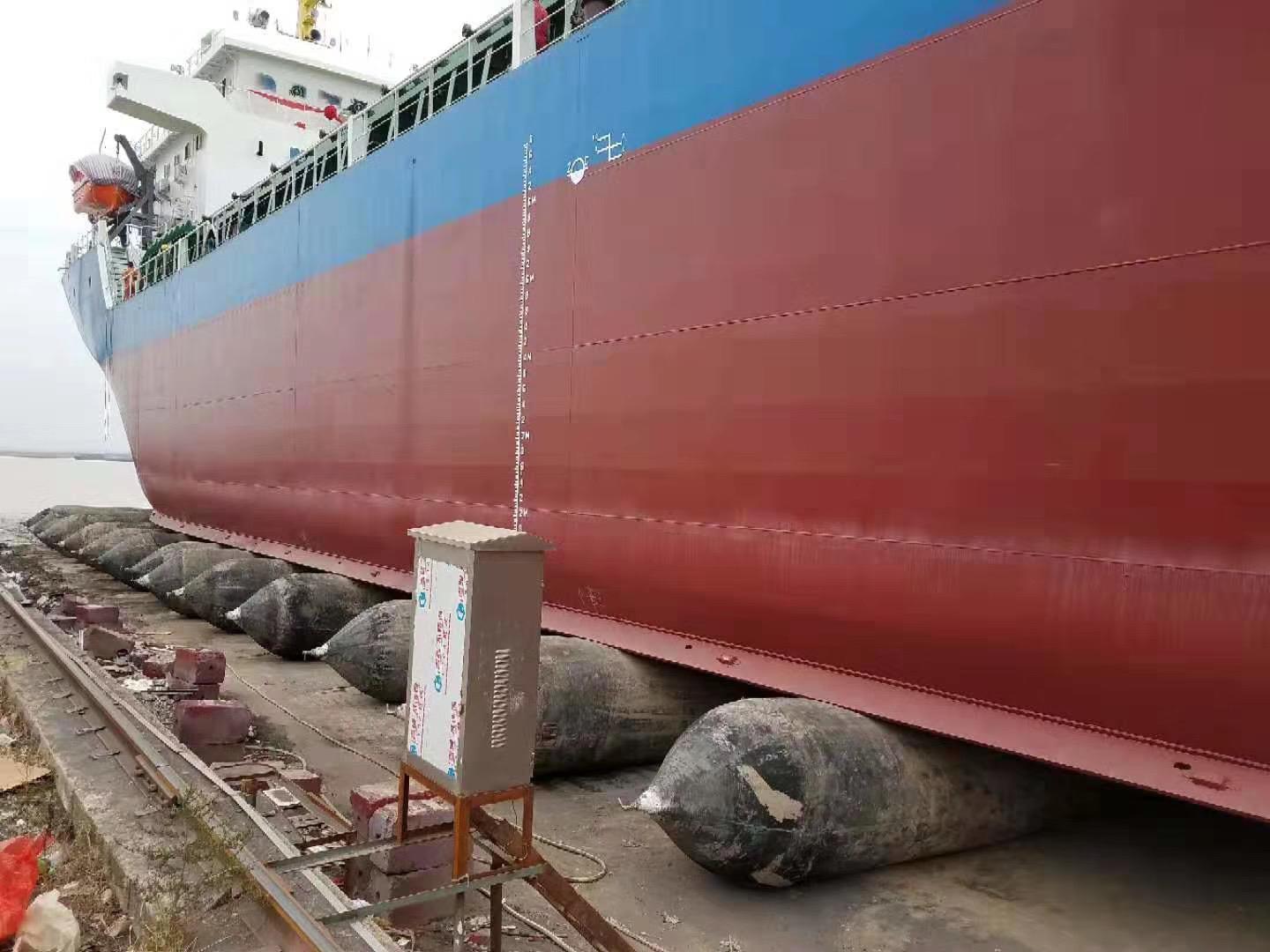
airbags under hull
Marine airbags are used for ship launching in shipyards because they let yards launch newbuilds and haul out vessels without expensive permanent slipways or dry docks. They are reusable, portable, low-cost, and distribute hull load evenly—making ship launching safer, faster, and more flexible for small coastal yards and large shipbuilders alike.
If you run a shipyard, repair facility, or marine engineering project, the question is no longer “Can airbags launch ships?”—it’s “Why are we still paying for traditional infrastructure we don’t need?”
This guide explains exactly why marine rubber airbags have become one of the most widely adopted ship-launching technologies in the world.
What Are Marine Airbags?
Marine airbags—also called ship launching airbags, marine rubber airbags, or pneumatic rolling bags—are cylindrical inflatable tubes made from:
- outer abrasion-resistant rubber
- inner airtight rubber layer
- high-tensile synthetic tire-cord or nylon reinforcement plies
They are placed under the hull, inflated with compressed air, and used as giant low-friction rollers. The vessel lifts off its blocks, rolls forward, and enters the water under controlled speed.
Most professional ship launching airbags follow ISO 14409 and are available with classification-society inspections such as CCS, BV, ABS, DNV, or LR.
How Ship Launching With Airbags Works
The physics is simple; the engineering is serious.
- Place deflated airbags transversely under the hull at calculated spacing.
- Inflate to working pressure—commonly around 0.05–0.20 MPa depending on diameter, length, and ply rating.
- Lift the hull evenly off wooden or steel support blocks.
- Remove blocks so the vessel rests entirely on airbags.
- Control movement with winches while airbags roll beneath the hull.
- Launch into water, then recover, deflate, and store the airbags for the next project.
Because rubber conforms to hull shape, pressure is spread across a large contact area. That reduces point loading, preserves coatings, and lowers the risk of hull deformation.
Why Use Marine Airbags for Ship Launching in Shipyards?
1. Lower Capital Cost Than Slipways or Dry Docks
A permanent concrete slipway or graving dry dock can cost millions and take months to build.
Marine airbags need:
- a prepared slope or compacted ground
- an air compressor
- winches or holding lines
- certified airbags
Many shipyards report 30–50% lower launching-related costs compared with traditional fixed infrastructure. For new or expanding yards, that capital can go into welding, manpower, and delivery speed instead of civil works.
2. Faster Project Turnaround
Slipway construction = weeks or months.
Airbag mobilization = hours to days.
Once the hull is complete and the launch path is prepared, the yard can:
- inflate airbags
- remove blocks
- launch on a suitable tide window
- recover equipment the same day
This matters for fishing boat builders, barge yards, ferry builders, and repair yards with tight charter deadlines.
3. Reusable and Portable
A good marine airbag is not a one-time consumable. With proper rinsing, drying, inspection, and storage, quality airbags can be reused for many launch cycles and typically offer service life around 6–10 years depending on duty and maintenance.
When deflated, they:
- fold compactly
- fit in containers
- ship overseas
- move between branch yards
- store until the next launch season
That makes them ideal for remote yards, tidal sites, disaster-response marine work, and ship repair in developing port regions.
4. Better Hull Protection
Traditional sliding ways can create friction spikes, skeg damage, keel scarring, and coating loss.
Airbags act like a soft pneumatic cradle:
- even load distribution
- shock absorption during movement
- adjustable pressure under different hull sections
- less local bending stress on plates and frames
For aluminum hulls, FRP vessels, and thin-plated workboats, this is a major advantage.
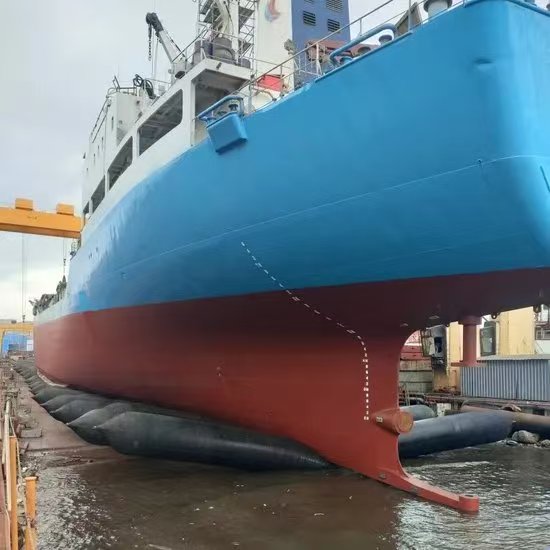
ship rolling into water
5. Works on Many Sites and Vessel Types
Airbags are not limited to one fixed ramp.
They can be used on:
- prepared concrete aprons
- compacted soil
- graded beaches
- inclined shorelines
- temporary shipbuilding plots
- remote repair sites
They handle:
- fishing vessels
- tugboats
- barges
- ferries
- landing craft
- cargo ships
- offshore support vessels
- medium-size tankers and dredgers
From a 20-ton workboat to several-thousand-ton cargo hulls, the same airbag system can be re-engineered by changing diameter, length, ply count, and quantity.
6. Safer Load Control When Engineered Properly
Airbags do not remove risk—bad calculations do. But when used correctly, they improve safety because:
- pressure is visible on gauges
- individual bags can be adjusted
- hull trim can be corrected before movement
- no heavy crane lift is required
- crew stay away from suspended loads
- launch speed is controlled by winches, not just gravity
Add pre-launch checks—cross-slope tolerance, water depth, tide, wind, debris removal—and airbag launching becomes a repeatable engineered process.
7. Lower Environmental and Civil Impact
Dry docks and slipways require major concrete work, drainage, and long-term land alteration.
Airbags need far less civil engineering:
- less concrete
- less excavation
- less seabed disturbance
- fewer permanent structures
- easier site restoration
For yards under environmental permitting pressure, this is increasingly important.
8. One System, Many Jobs
Buy airbags for launching—keep using them for:
- ship landing / haul-out
- hull inspection
- dry-ground maintenance
- heavy structure moves
- caisson and bridge-element transport
- marine salvage and refloating
That ROI is hard to beat with a single-purpose slipway.
Marine Airbags vs Traditional Ship Launching Methods
| Factor | Marine Airbags | Fixed Slipway | Dry Dock |
| Upfront cost | Low-Medium | High | Very high |
| Build time | Hours-days | Weeks-months | Months-years |
| Portability | High | None | Low |
| Reusability | Yes | Built-in structure | Built-in structure |
| Hull stress | Low if engineered | Medium-High | Low |
| Site flexibility | High | Low | Meium |
| Best for | Many vessel sizes/sites | High-volume fixed yard | Major repairs, large ships |
Airbags are not always the answer—very large vessels, ultra-high launch frequency, or steep unsafe slopes may still favor floating docks or engineered slipways. But for most commercial and repair yards, airbags win on flexibility and cost.
Key Specs Shipyards Should Check
When sourcing airbags, do not buy “by diameter only.” Check:
- Diameter: 0.8 m – 2.5 m common, larger available
- Effective length: matched to hull bearing area
- Ply layers: 4–12 depending on load
- Working pressure: must match vessel weight and contact area
- Safety factor: usually ≥ 4:1 burst vs working pressure
- Standard: ISO 14409 minimum
- Certification: CCS / BV / ABS / DNV / LR if required
- Repair support: patches, valves, pressure-test reports
- Supplier engineering: load calculation, spacing plan, launch procedure
A 1.5 m × 12 m, 6-ply airbag can support roughly 100–150 tons per linear meter at safe working pressure—but the full launch plan depends on hull weight, CoG, slope, and friction.
Common Mistakes to Avoid
- Under-specifying ply count
- Too-wide airbag spacing → hull sagging
- Uneven inflation across the airbag grid
- Launching with sharp debris on the track
- Ignoring cross-slope tolerance
- Overinflating to “lift faster”
- Launching in excessive wind/current
- No holding winch or emergency stop plan
Airbag launching fails when yards treat it like inflating balloons. It succeeds when treated like marine structural engineering.
FAQ: “Why Use Marine Airbags for Ship Launching?”
Why do shipyards use marine airbags instead of slipways?
Because airbags remove the need for expensive permanent ramps, launch faster, protect the hull with even load distribution, and can be reused at multiple sites.
Are marine airbags safe for ship launching?
Yes—when manufactured to ISO 14409, inspected before use, inflated to rated pressure, and launched with proper winch control, slope checks, and water-depth planning.
What size ship can be launched with marine airbags?
From small boats to several-thousand-ton vessels. Very large ships need more airbags, higher ply counts, stricter calculations, and experienced supervision.
How many times can ship launching airbags be reused?
Quality airbags can be used for many cycles and last several years with correct rinsing, drying, storage, and inspection.
Do marine airbags damage the hull?
Not when correctly specified. They actually reduce point stress compared with hard sliding ways.
Final Answer: Why Use Marine Airbags for Ship Launching in Shipyards?
Because they turn a capital-heavy, fixed-infrastructure operation into a portable, repeatable, lower-cost marine engineering process.
You get:
✅ lower cost
✅ faster launches
✅ reusable equipment
✅ better hull protection
✅ multi-site flexibility
✅ salvage and haul-out value
✅ smaller environmental footprint
For modern shipyards, marine airbags are not a “cheap trick.” They are a proven global standard for launching and landing vessels.
Need ISO 14409 marine airbags with load calculation and on-site launch support?
Contact a certified marine airbag manufacturer for vessel-specific airbag quantity, diameter, ply rating, and launch slope verification before your next launch.

