

What Is Support Buoy? Types, Uses & Offshore Applications Explained
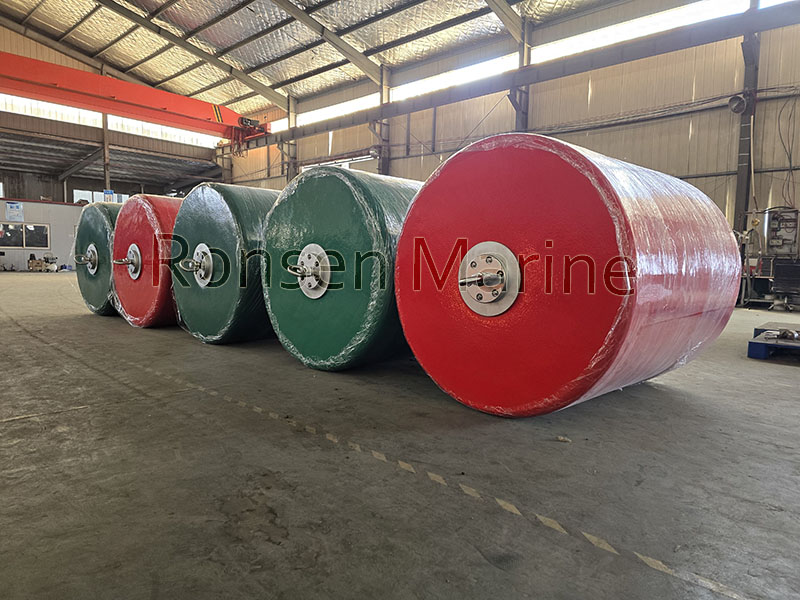
Support Buoys
A support buoy is a foam-filled or steel-reinforced floating device used offshore to suspend hoses, cables, mooring chains, and subsea pipelines above the seabed, reducing mechanical stress and preventing seabed drag. Unlike a navigation buoy that guides ships, a support buoy is operational marine infrastructure—its job is to provide controlled buoyancy and load distribution in mooring and subsea systems.
What Is a Support Buoy (Simple Definition)
A support buoy (also called surface support buoy, chain support buoy, or foam support buoy) is a closed-cell foam-core float with a central steel strength member. It is anchored or connected to a mooring line to keep flexible jumpers, loading hoses, power cables, or anchor chains elevated in a designed catenary shape.
Snippet-ready answer:
Support buoys are unsinkable offshore floats that hold hoses, cables, and chains off the seabed in SPM and mooring systems, protecting subsea assets from abrasion and fatigue.
Support Buoy vs Mooring Buoy vs Navigation Buoy
TypeMain JobHas Lights?Typical UserNavigation BuoyMark channel / hazardYes (IALA colors)Mariners, port stateMooring BuoyTie up vesselsSometimesHarbors, ship crewsSupport BuoyLift & protect hoses/cables/chainsNo (unless dual-use)Offshore engineers
Support buoys belong to the mooring & subsea support family, not aids-to-navigation.
Common Types of Support Buoys
- Cylindrical Support Buoy – High buoyancy, low roll, used for pipeline floatation and SPM hose support.
- Chain-Through Support Buoy – Anchor chain passes through a central steel tube; spreads tension and cuts seabed chafe.
- Pick-Up Buoy – Small float marking rope/chain end for retrieval.
- Anchor Pendant Buoy – Keeps heavy pendant lines at surface.
- Surface Foam Support Buoy – PE/EVA closed-cell foam + PU skin, puncture-resistant and unsinkable.
How a Support Buoy Works
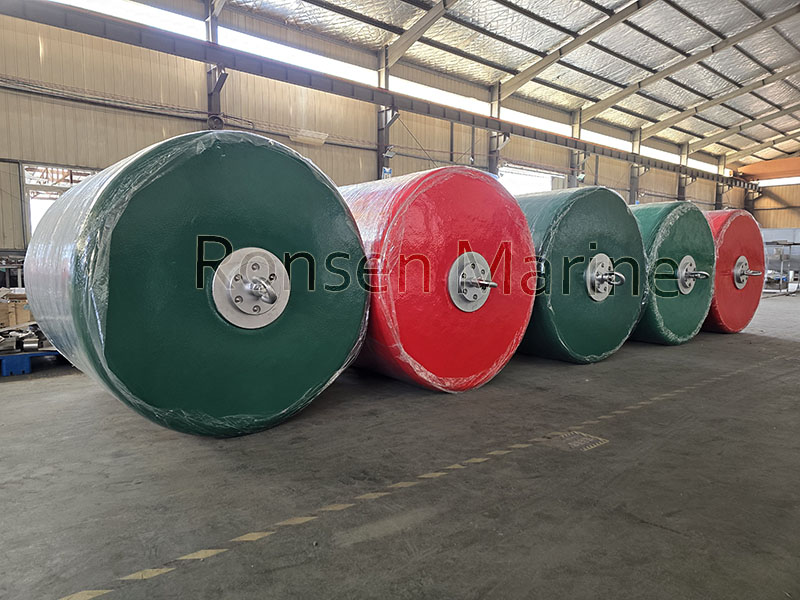
Support Buoy
Load path in a typical system:
- Seabed anchor / clump weight → resists uplift
- Riser chain or tension member → transfers load
- Buoy foam core → gives net positive buoyancy
- Central steel tube + end flanges → takes tensile load, not the foam alone
Even if the polyurethane skin is punctured, closed-cell EVA/PE foam does not absorb water, so the buoy stays afloat.
Where Support Buoys Are Used
- Single Point Mooring (SPM) terminals – support tanker loading hoses
- Subsea cable & umbilical floatation – wind farm export cables, ROV umbilicals
- Offshore oil & gas – riser support, chafe chain elevation
- Port & harbor installations – temporary hose bridges, salvage support
- Aquaculture / scientific moorings – instrument pendant flotation
Key Construction Features
- Closed-cell PE/EVA foam core (unsinkable)
- Nylon-reinforced polyurethane skin (UV/abrasion resistant)
- Epoxy or hot-dip galvanized central steel tube
- Load-distribution flanges, gussets, swivel/clevis/pad-eye fittings
- Net buoyancy calculated against wet weight of hose/cable/chain
Why Engineers Specify Support Buoys
- Prevent hose collapse and seabed wear
- Reduce fatigue on mooring chains
- Enable ship-to-shore transfer without fixed jetties
- Foam-filled units never burst like steel air tanks
- Lower lifecycle cost than inflatable or hollow-steel buoys
FAQ
What is a support buoy used for?
To keep offshore hoses, cables, and chains suspended above the seabed and to share mooring loads.
Is a support buoy the same as a mooring buoy?
No. A mooring buoy is tied by ships; a support buoy lifts equipment and supports mooring elements.
What is inside a support buoy?
Closed-cell foam core, central steel tube, and reinforced PU skin.
Do support buoys have navigation lights?
Only if designed as dual-purpose marker buoys; standard support buoys do not.
