

What Is General Surface Support Buoy? Definition, Construction, Types & Offshore Uses
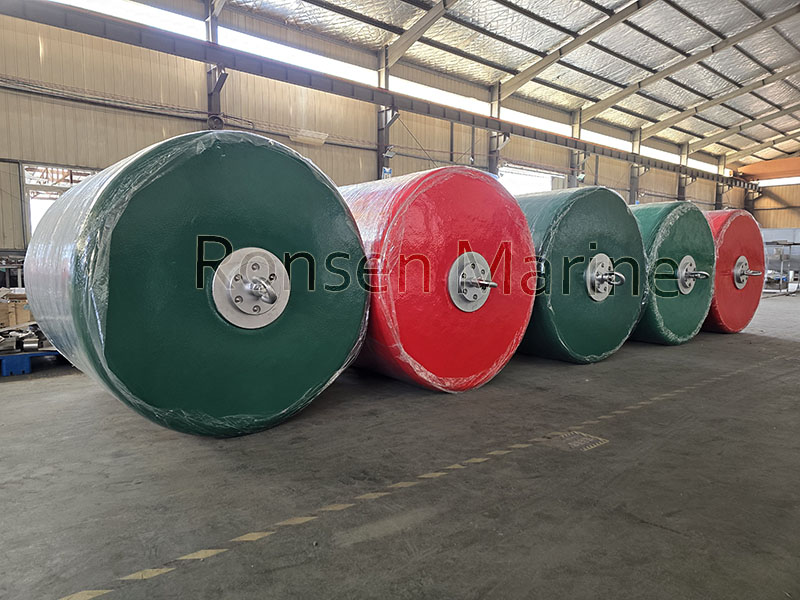
General surface support buoy
A general surface support buoy is a foam-filled floating device used in offshore mooring systems to support mooring chains, hoses, cables, and ropes at or near the water surface. It is not a normal navigation marker—its job is to provide controlled buoyancy, reduce seabed drag, protect subsea equipment, and help vessels or terminals manage mooring tension safely.
In single point mooring (SPM), cable laying, dredging, LNG terminals, and offshore wind projects, a general surface support buoy acts as a load-relief float: the foam gives buoyancy, the internal steelwork carries tension, and the polyurethane skin resists abrasion, UV, and seawater.
Quick Answer
A general surface support buoy is a closed-cell foam-core marine float with an internal steel strength member and a polyurethane outer skin. It is used to suspend mooring chains, hoses, or cables, reduce chain seabed wear, and improve safety in offshore mooring systems.
What Is a General Surface Support Buoy?
A general surface support buoy is a surface-floting mooring component. Unlike a navigation buoy that mainly guides ships, a surface support buoy is operational infrastructure.
It usually consists of:
- Closed-cell PE/EVA foam core – permanent buoyancy, water does not enter if skin is damaged
- Central steel tube / gussets / flanges – carries tensile load from chain or pendant
- Polyurethane (PU) elastomer skin – abrasion-, UV-, seawater-resistant
- End fittings – pad eye, clevis eye, swivel, chain locking plate, bail eye
Because there is no air chamber, the buoy does not burst or deflate. It remains unsinkable after impact, chafe, or puncture.
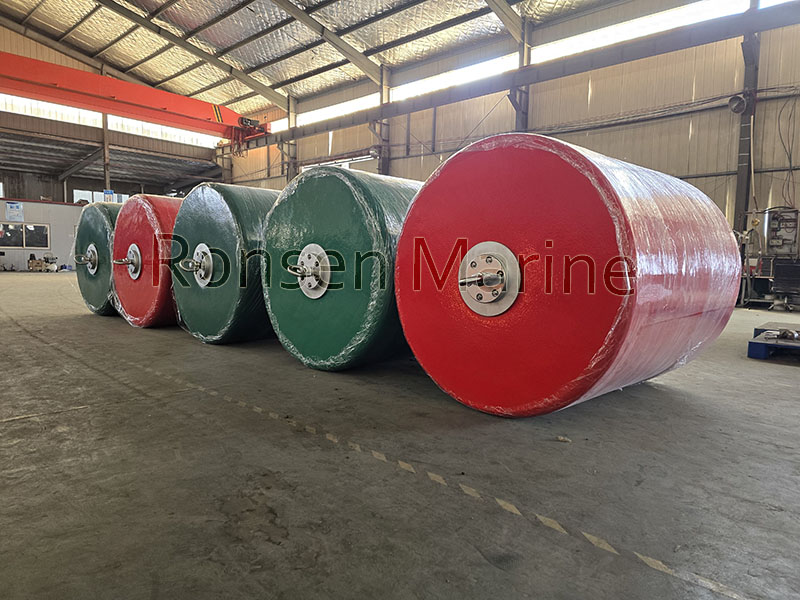
Pick Up Buoys
How Does a General Surface Support Buoy Work?
The working principle is simple physics plus marine engineering:
- The buoy floats because the foam core displaces seawater.
- The mooring chain or hose is connected to the steel core.
- Part of the line’s submerged weight is lifted upward.
- Seabed chain drag and catenary stress are reduced.
- The steelwork takes tension; the foam only provides buoyancy and impact cushioning.
- When a hull, chain, or tug touches the buoy, the foam compresses and rebounds—this is called self-fendering.
Net buoyancy rule used by engineers:
Net buoyancy ≥ submerged weight of chain/hose/cable + freeboard reserve
Main Types of General Surface Support Buoy
1. Cylindrical Surface Support Buoy
Large foam body with end fittings. Used to support hoses, pendants, or midline chain spans in SPM and dredging systems.
2. Chain-Through Buoy
The mooring chain passes through a central steel tube. Used where the chain itself must share axial load and the buoy must stay positioned on the line.
3. Pick-Up Buoy
Smaller support buoy used to mark and retrieve a submerged mooring line, messenger rope, or chain end. Common in tanker mooring and subsea operations.
4. Anchor Pendant / Auxiliary Support Buoy
Keeps heavy pendants, clump weights, or auxiliary lines at the correct depth/profile.
General Surface Support Buoy vs Navigation Buoy
| Item | General Surface Support Buoy | Navigation Buoy |
| Main function | Support chain/hose/cable | Mark channel/hazard |
| Load-bearing | Yes | Usually no |
| Used in SPM | Yes | Rarely |
| Self-fendering | Yes | Sometimes |
| Lights/AIS | Optional | Common |
| Buyer | Offshore engineer/terminal | Port/authority |
Construction Details Buyers Should Know
Foam Core
Closed-cell polyethylene (PE) or EVA foam. Low density, high water exclusion, long service life.
PU Skin
Sprayed polyurethane elastomer. For harsh duty, nylon- or polyester-reinforced PU is used.
Steelwork
Central tube + longitudinal gussets + load-distribution flanges. Finish: epoxy coating or hot-dip galvanizing.
End Fittings
- Bail eye
- Clevis eye
- Swivel
- Pad eye
- Chain locking plate
- Single locking pin
Where Is a General Surface Support Buoy Used?
- Single Point Mooring (SPM) terminals
- Crude oil / product / LNG marine terminals
- Subsea cable and umbilical laying
- Offshore wind farm operations
- Dredging discharge hose support
- Aquaculture mooring systems
- Salvage and temporary offshore moorings
- Port and harbor hose bridges
Benefits of General Surface Support Buoys
✅ Unsinkable closed-cell foam
✅ No inflation, no air loss
✅ High impact absorption / self-fendering
✅ Reduced seabed chain wear
✅ Lower maintenance than steel air buoys
✅ Custom net buoyancy, diameter, color, fittings
✅ Suitable for tropical, North Sea, and Arctic-modified projects
How to Specify a General Surface Support Buoy
When requesting a quote, send:
- Required net buoyancy (kg or kN)
- Chain diameter and grade
- Hose/cable outer diameter and wet weight
- Buoy diameter and body length
- Foam type: PE / EVA
- Skin: PU / nylon-reinforced PU
- Steelwork finish: HDG / epoxy
- End fitting type
- Color: yellow / orange / red / grey
- Environment: harbor, offshore, Arctic, high-UV
- Certs: ISO / BV / ABS / LR / CCS
Common FAQ
What is a general surface support buoy used for?
It supports mooring chains, hoses, ropes, and cables in offshore mooring systems, reducing seabed abrasion and controlling catenary tension.
Is a general surface support buoy unsinkable?
Yes. Most are foam-filled with closed-cell PE/EVA foam. Even if the PU skin is punctured, water does not flood the core.
What is the difference between a support buoy and a mooring buoy?
A mooring buoy is mainly a tie-up point for vessels. A general surface support buoy is an engineering float that lifts and protects mooring lines and subsea equipment.
What is a chain-through surface support buoy?
It is a support buoy with a central tube so the mooring chain passes through the buoy body and shares tension along the line.
Can surface support buoys be customized?
Yes. Diameter, length, buoyancy, color, steel coating, swivel type, and chain-locking devices are all project-specific.
Conclusion
A general surface support buoy is a foam-core, steel-reinforced, PU-skinned offshore float that keeps mooring chains, hoses, and cables partially suspended, protected, and safely loaded. It is one of the most important components in SPM and offshore transfer systems because it improves safety, reduces equipment fatigue, and needs almost no inflation maintenance.
If you are specifying buoys for an offshore project, size by net buoyancy, certify by steelwork SWL, and choose PU/foam construction for long-term unsinkable performance.
