

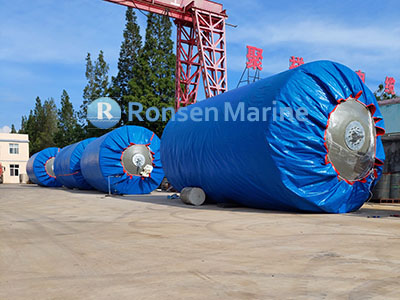
Foam Filled Fenders
Foam Filled Fender is a the fender features a polyurethane elastomer outer layer, a nylon fiber reinforcement layer, and a foam solid core layer as the filling layer, providing buoyancy characteristics.
What’s the constructure of a foam filled fender?
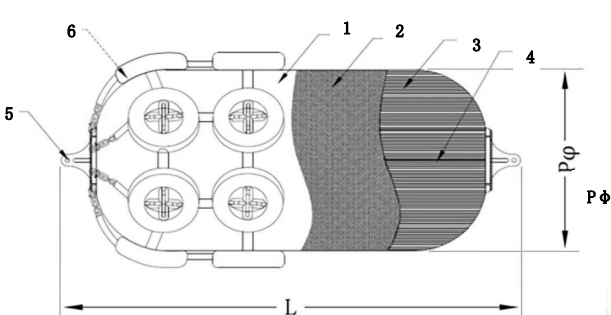
The fender consists of an outer layer of polyurethane elastomer, a nylon fiber reinforcement layer, and a foam core. The schematic diagram of the fender structure is shown below.
Foam Filled Fender
1. Outer polyurethane elastomer layer;
2——Nylon fiber reinforcement layer;
3——Foam solid core layer;
4. Support inner pipe (optional);
5—Flange structure;
6——Tire guard (optional).
L——Fender length, unit in millimeters (mm);
Pφ —— Fender diameter, unit in millimeters (mm)
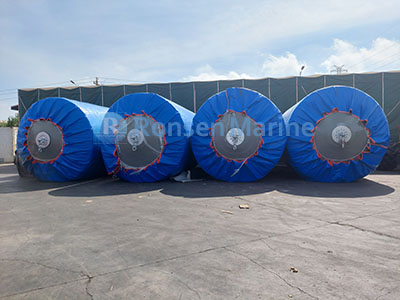
Foam Fenders
What’s the classification?
Foam Fenders can be divided into:a) Z-type – heavy-duty fender with high reaction force and high energy absorption under the same compression conditions.
b) Q-type – lightweight fender with low reaction force and low energy absorption under the same compression conditions.
What’s appearance quality?
The surface of the fender should have a uniform texture and should not have defects such as foreign objects, bubbles, cracks, etc. that affect its performance.
The filling material inside the fender should not be exposed.
What’s the material?
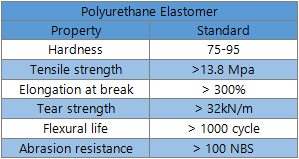
The physical properties of polyurethane layer elastomer materials shall comply with the provisions of Table 4.
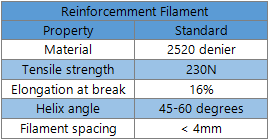
The nylon fiber reinforcement layer material can use 1400D2/V1 nylon, and its physical properties should comply with the specifications in Table 5.
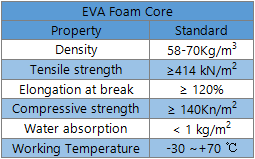
The physical properties of foam solid core material shall comply with the provisions in Table 6.
What’s the fender body tests?
Appearance quality: Visual inspection is used for inspection
Specifications and Dimensions: Use steel tape, steel ruler, and vernier caliper that meet the accuracy requirements for inspection
Dimensional tolerance: Use steel tape, steel ruler, and vernier caliper that meet the accuracy requirements for inspection
Mechanical Properties: Perform testing and calculation according to the method specified in Appendix A
What’s the material test?
The physical properties of polyurethane layer elastomer materials shall be determined in accordance with the relevant standards specified in Table 4.
The physical properties of nylon fiber reinforced layer materials shall be determined in accordance with the relevant standards specified in Table 5.
The physical properties of foam solid core material shall be determined according to the relevant standards in Table 6.
What’s the type test?
Timing of Inspection
Type inspection should be conducted for fenders in any of the following situations:
a) The first production product for trial production, finalization identification, and factory transfer production of new products;
b) When there are significant changes in structure, materials, and processes that can affect product performance;
c) When the product is discontinued for more than 6 months and production resumes;
d) When the higher-level testing agency requires type inspection.
What’s the transportation?
Fenders should be kept clean during transportation.
Prevent fenders from being dropped, bumped, dragged, or rolled.
Prevent fenders from being hooked, suspended, pricked, or scratched by hard objects.
Prevent the fender from coming into contact with substances such as acids, alkalis, oils, and organic solvents.
What’s the storage?
Fenders should be stored indoors at a temperature of -10 ℃ to 30 ℃, avoiding direct sunlight and exposure to rain and snow.
Prevent the fender from coming into contact with substances such as acids, alkalis, oils, and organic solvents.
The fender should be at least 1 meter away from the heat source.
