

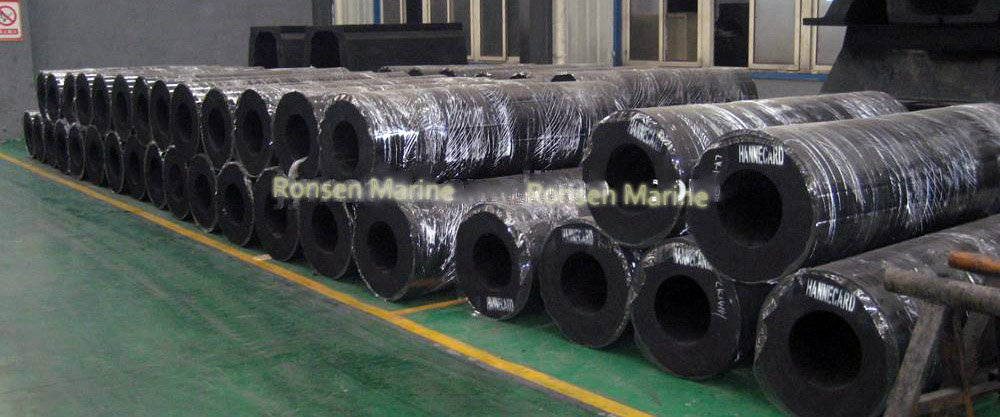
Cylindrical Rubber Fenders
What Is a Cylindrical Rubber Fender? (Complete Guide)
A cylindrical rubber fender is a solid, hollow marine fender with a circular cross-section, designed to absorb berthing energy by compressing high-resilience rubber. Commonly installed on quay walls, piers, and small-to-medium vessels, it protects both the dock structure and the ship hull from impact damage. Unlike pneumatic fenders, cylindrical rubber fenders are air-independent, low-maintenance, and PIANC-compliant—making them one of the most cost-effective solutions for ports, inland waterways, and workboat fleets.
What Is a Cylindrical Rubber Fender? (Definition & Working Principle)
A cylindrical rubber fender consists of a hollow cylindrical body made from natural rubber (NR), SBR, or EPDM compounds. During berthing, the fender compresses radially, converting kinetic energy into elastic deformation. Once the vessel moves away, the rubber fully recovers its shape.
Because it contains no air, there is no risk of deflation or explosion. The hollow core reduces weight while maintaining structural strength, allowing easy handling and installation.
Key Advantages of Cylindrical Rubber Fenders
- High Energy Absorption: Progressive load-deflection curve protects both vessel and dock.
- Zero Maintenance: No air pressure checks or refills required.
- Tide Adaptability: Chain-mounted versions move vertically with tidal fluctuations.
- Abrasion & UV Resistance: Performs reliably in harsh marine environments.
- Cost-Effective: Lower initial cost and minimal lifecycle expenses.
- PIANC Compliance: Manufactured according to international fender design guidelines.
Technical Specifications
| Parameter | Specification |
|---|---|
| Diameter Range | Ø100 mm – Ø2000 mm (Custom available) |
| Length | Up to 6000 mm |
| Rubber Material | NR / SBR / EPDM blends |
| Hardness | 65 ± 5 Shore A |
| Tensile Strength | ≥ 16 MPa |
| Elongation at Break | ≥ 450% |
| Service Temperature | -40°C to +70°C |
| Mounting | Chain bearing / Steel bar bearing |
| Standards | PIANC Guidelines, HG/T 2866 |
Installation Methods
Chain Bearing Installation
Chains pass through the central hole, allowing the fender to move with tidal changes. Ideal for locations with significant water level fluctuations.
Steel Bar Bearing Installation
Steel bars or bolts fix the fender rigidly to the dock. Best for permanent, high-load applications requiring minimal movement.
Typical Applications
- Ports & Terminals: General cargo, bulk, and Ro-Ro berths
- Inland Waterways: Locks, dams, and canal walls
- Vessels: Tugboats, ferries, and workboats
- Old Wharf Renovation: Low civil works requirement
- Offshore Structures: Walkways and platform interfaces
Cylindrical Rubber Fender vs Pneumatic & Foam Fenders
| Feature | Cylindrical Rubber Fender | Pneumatic (Yokohama) Fender | Foam Filled Fender |
|---|---|---|---|
| Maintenance | Minimal | Regular pressure checks | Minimal |
| Floating | No | Yes | Yes |
| Reaction Force | Moderate | Very Low | Moderate–High |
| Installation Cost | Low | Medium | Medium |
| Best For | Fixed docks, barges | STS, large tankers | Navy, offshore |
Why Choose Ronsen Cylindrical Rubber Fenders?
- PIANC-compliant manufacturing process
- Strict QC: tensile, hardness, and aging tests
- Custom diameters, lengths, and pre-drilled holes
- Global export experience (Asia, Middle East, Europe, Americas)
- Full documentation: test reports and certificates
Frequently Asked Questions (FAQ)
What is the standard size of a cylindrical rubber fender?
Standard diameters range from 100 mm to 2000 mm, with lengths up to 6000 mm. Custom sizes are available for specialized projects.</p >
Are cylindrical rubber fenders suitable for tidal areas?
Yes. When installed with chain bearings, the fender moves vertically with tides, ensuring continuous protection.</p >
How long do cylindrical rubber fenders last?
Typically 10–15 years under normal marine conditions, thanks to UV- and seawater-resistant rubber compounds.</p >
Do cylindrical fenders require maintenance?
Very little. Routine visual inspections are sufficient. Unlike pneumatic fenders, they do not require air pressure monitoring.</p >
Can cylindrical fenders be used on ships?
Yes. They are commonly installed on tugboats, ferries, and workboats using chain suspension systems.</p >
Request a Quotation or Technical Drawing
Our marine engineering team provides free berthing analysis, sizing recommendations, and competitive pricing.
</p >
📞 Phone / WhatsApp: [+86 183 5328 0885]
