

What Is a Support Buoy? Definition, Types, Uses and Selection Guide
Quick Answer: What Is a Support Buoy?
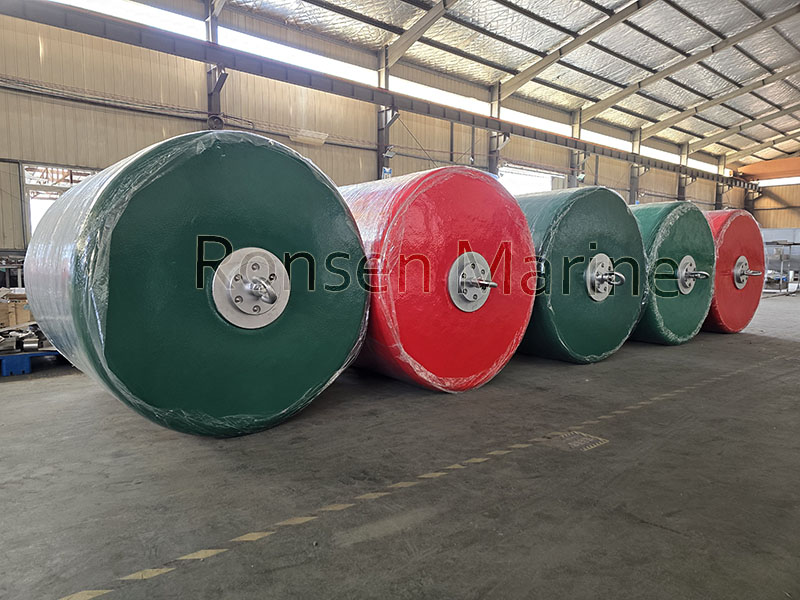
Support Buoys
A support buoy is a heavy-duty floating device used in marine and offshore operations to provide buoyancy for mooring chains, hoses, cables and ropes. Unlike a navigation buoy, which marks channels and hazards for vessels, a support buoy is operational infrastructure. Its main job is to keep subsea equipment partially suspended, reduce tension and abrasion, and protect mooring systems from fatigue and seabed wear.
Support buoys are commonly used in single-point mooring systems, offshore oil and gas terminals, subsea cable installation, dredging projects, offshore wind farms and aquaculture operations.
Support Buoy Definition
A support buoy is a floating marine structure, usually made with a closed-cell PE or EVA foam core, a steel central strength member and a durable polyurethane skin. The buoy provides permanent buoyancy and supports suspended loads without relying on air-filled chambers.
In simple terms, a support buoy is not designed primarily to guide ships. It is designed to lift, stabilize and protect the underwater lines that offshore systems depend on. Most modern support buoys are considered unsinkable because the foam core remains buoyant even if the outer skin is punctured.
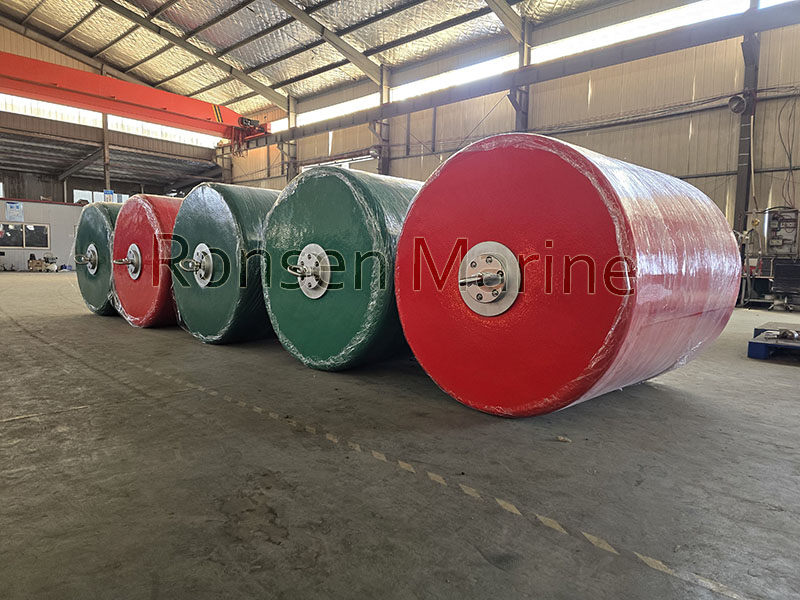
Support Buoy
How Does a Support Buoy Work?
- The seabed anchor or clump weight resists upward movement.
- The mooring chain, rope or tension member transfers the load.
- The closed-cell foam core provides net positive buoyancy.
- The internal steel tube and end fittings carry tensile load.
- The PU skin protects the buoy from seawater, abrasion and UV exposure.
By controlling buoyancy and catenary shape, the buoy prevents lines from dragging on the seabed. This reduces wear, fatigue and the risk of equipment failure.
Support Buoy vs Navigation Buoy vs Mooring Buoy
Many people confuse these three buoy types. Understanding the difference is essential when selecting marine equipment.
| Buoy Type | Main Purpose | Typical User |
| Support Buoy | Lifts and protects chains, hoses and cables | Offshore engineers |
| Mooring Buoy | Provides a secure tie-up point for vessels | Ports, marinas, ship crews |
| Navigation Buoy | Marks channels, hazards and safe water | Mariners and port authorities |
A mooring buoy is where a vessel ties up. A navigation buoy tells vessels where it is safe to travel. A support buoy supports the mooring system itself.
Types of Support Buoys
1. Cylindrical Support Buoy
Cylindrical support buoys offer high buoyancy and low rolling characteristics. They are often used to support pipelines, dredging hoses and SPM loading hoses.
- Pipeline flotation
- Dredging discharge hoses
- Offshore hose support
2. Chain-Through Support Buoy
A chain-through support buoy has a central steel tube that allows the mooring chain to pass through the buoy body. It shares axial load and helps control the shape and tension of the mooring line.
- Single-point mooring systems
- Tanker terminals
- Mid-line chain support
3. Pick-Up Buoy
A pick-up buoy is a smaller support buoy attached to a rope or chain end. It helps crews locate and retrieve submerged mooring equipment.
- Mooring line retrieval
- Submerged asset marking
- Temporary offshore moorings
4. Anchor Pendant Buoy
Anchor pendant buoys keep heavy pendant lines, auxiliary ropes or clump-weight assemblies at a designed depth or surface profile.
- Mooring pendants
- Auxiliary line support
- Offshore retrieval systems
5. Foam-Filled Surface Support Buoy
Foam-filled support buoys use closed-cell PE or EVA foam with a polyurethane skin. They remain buoyant after impact damage, making them ideal for demanding offshore environments.
- Puncture-resistant construction
- No air chambers to inflate
- Low maintenance
- Long service life
Common Uses of Support Buoys
Offshore Oil and Gas
Support buoys are widely used in CALM and SPM terminals to support tanker loading hoses and mooring chains. They reduce hawse-pipe tension and keep equipment safely positioned.
Subsea Cable Installation
Support buoys help maintain controlled buoyancy during the laying of power cables, fiber-optic cables, umbilicals and ROV cables.
Offshore Wind Farms
Wind farm projects use support buoys to support export cables, marker pendants and temporary marine infrastructure.
Dredging Operations
Dredging hoses and discharge lines are often heavy and abrasive. Support buoys keep them off the seabed and improve system stability.
Aquaculture
Support buoys stabilize mooring lines and floating net pens. Their foam-filled design reduces maintenance and improves long-term reliability.
Support Buoy Construction
High-quality offshore support buoys typically have three layers.
1. Closed-Cell Foam Core
The foam core provides permanent buoyancy. PE and EVA foams are common because they are lightweight, water-resistant and resilient.
2. Reinforcement Layer
Nylon or polyester reinforcement helps distribute tensile stress and improves impact resistance.
3. Polyurethane Skin
The PU skin protects the buoy from abrasion, saltwater, ultraviolet radiation, marine growth and impact damage. Steel components are usually hot-dip galvanized or epoxy coated for corrosion protection.
Benefits of Support Buoys
- Keep mooring chains, cables and hoses off the seabed
- Reduce tension, fatigue and abrasion
- Provide reliable buoyancy without air pressure
- Perform well in tropical, offshore and cold-region projects
- Lower maintenance compared with inflatable or hollow steel buoys
- Offer customizable buoyancy, dimensions, colors and fittings
- Improve safety in SPM and offshore transfer systems
How to Choose the Right Support Buoy
To select the correct support buoy, consider the following specifications:
- Required net buoyancy: calculate in kilograms or kilonewtons.
- Chain diameter and grade: match the central tube and end fittings.
- Hose or cable dimensions: include outer diameter and submerged weight.
- Water depth and tidal range: determine freeboard and catenary requirements.
- Environmental conditions: account for current, wave height and temperature.
- Steel finish: choose hot-dip galvanized or epoxy coating.
- Buoyancy material: select PE, EVA or project-specific foam.
- Certification requirements: common standards include ISO, BV, ABS, LR, CCS and OCIMF-aligned specifications.
Support Buoy Sizing Example
A simple way to estimate required buoyancy is to calculate the submerged weight of the line segment, add the required freeboard reserve, select a buoy with matching net buoyancy, and confirm that the central steelwork meets the safe working load.
For example, if the submerged line weight is 1,500 kg and the project requires a 500 kg freeboard reserve, the net buoyancy should be at least 2,000 kg. Actual sizing should always be confirmed by a qualified marine engineer.
Support Buoy Maintenance Tips
- Inspect the PU skin annually for cuts and abrasions.
- Check galvanized or epoxy steelwork for corrosion.
- Rinse the buoy with fresh water after tropical or polluted service.
- Verify shackles, swivels and end fittings regularly.
- Store spare buoys in shaded, ventilated areas.
- Repair damaged PU skins before the foam core is exposed.
Frequently Asked Questions
What is a support buoy used for?
A support buoy is used to lift and protect mooring chains, hoses, cables and ropes. It prevents seabed abrasion, reduces line tension and improves offshore system reliability.
Is a support buoy the same as a mooring buoy?
No. A mooring buoy provides a tie-up point for vessels. A support buoy supports and protects mooring equipment.
Are support buoys unsinkable?
Most foam-filled support buoys are considered unsinkable because their closed-cell foam core remains buoyant even if the outer skin is punctured.
Do support buoys have navigation lights?
Standard support buoys usually do not. However, some units can be customized with lights, radar reflectors or markers for dual-purpose applications.
How long do foam-filled support buoys last?
With proper maintenance, high-quality offshore support buoys can last 10 to 15 years or longer. Service life depends on UV exposure, abrasion and environmental conditions.
Can support buoys be customized?
Yes. Diameter, length, buoyancy, color, foam type, PU skin, steel coating, end fittings and swivel assemblies can all be customized.
Conclusion
So, what is a support buoy? It is a rugged, foam-filled marine float designed to support and protect offshore equipment. By lifting chains, hoses and cables, it reduces seabed wear, controls tension and extends the service life of mooring systems.
For offshore projects, choose a support buoy based on net buoyancy, safe working load, environmental conditions and steelwork corrosion protection. When specified correctly, a support buoy delivers long-term performance with minimal maintenance.
Need a custom support buoy? Contact a qualified manufacturer with your required net buoyancy, chain size, hose or cable details and operating environment.
