

What Is a Mooring Buoy? The Complete Guide to Types, Components, Installation, and Maintenance
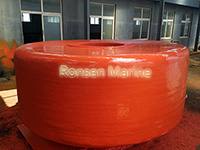
Mooring Buoys
Quick Answer: What Is a Mooring Buoy?
A mooring buoy is a permanently anchored floating device that gives a vessel a fixed point to tie up to — without the boat ever dropping its own anchor. Beneath the buoy, a heavy ground anchor or sinker block, a ground chain, and a riser chain hold the whole system in place on the seabed. The boat attaches to a pick-up line or pendant at the top of the buoy, and the combined load of the vessel, wind, and current is transferred down through the hardware to that seabed anchor.
In short: a mooring buoy is a berthing point, not a navigation mark. Its job is to secure boats safely while protecting the seabed from anchor scars — a role that has made it a cornerstone of modern harbour management, marine conservation, and commercial shipping alike.
What Is a Mooring Buoy? (Definition and Core Concept)
Mooring Buoy Definition

Anchor Mooring Buoys
A mooring buoy is a floating marker anchored to the seabed that allows vessels to secure themselves without deploying their own ground tackle. The vessel ties directly to the buoy, which is held in position by a heavy ground chain, sinker block, or anchor system on the bottom.
Unlike a navigation buoy — which exists to mark a channel, hazard, or regulatory zone — a mooring buoy is a functional berthing point. It is built to carry load, not merely to be seen.
Mooring Buoy vs Anchor: What Is the Real Difference?
The key difference comes down to where the holding power lives. When you anchor, your vessel carries the anchor, rode, and chain, and you must lay out enough scope to hold. When you use a mooring buoy, the holding power is provided by a permanent, engineered system on the seabed, and your boat simply attaches to the top of it.
This distinction brings four practical advantages:
- No need to lower, retrieve, or stow heavy ground tackle on every visit.
- Far less swing room required, because the mooring system controls the swing arc.
- No anchor drag across the bottom — a major benefit in crowded anchorages and protected areas.
- A predictable, inspected attachment point that multiple vessels can use in turn.
A mooring is only as strong as its weakest link, and the part you can see — the buoy itself — is only the top of a long chain of hardware. Understanding the whole system is essential before choosing or replacing any part of it.
Mooring Buoy vs Other Buoys: Don’t Tie Up to the Wrong One
On the water, colour coding is the fastest way to tell a mooring buoy apart from other floating markers. The table below summarises the most common types you will encounter:
| Buoy Type | Typical Appearance | Can You Tie to It? |
| Mooring buoy | White with a blue horizontal band | Yes — this is the only buoy designed for tying up |
| Safe water mark | White and red vertical stripes | No |
| Isolated danger mark | Black with one or more red horizontal bands | No |
| Special purpose / regulatory | Solid yellow or white with orange symbols | No |
| Lateral channel marker | Red (starboard) or green (port) — IALA Region B | No |
In U.S. and IALA-governed waters, the white-with-blue-band scheme is the universally recognised identifier. A mooring buoy that is lighted displays a white light; a navigation aid must never be used as a tie-up point.
How Does a Mooring Buoy Work?
A mooring buoy works by providing a strong, stable attachment point that keeps a vessel in place without the vessel using its own anchor. The load is transferred from the boat, down through the buoy’s hardware and riser chain, to the permanent ground anchor below.
Here is the full load path, from seabed to vessel.
The Five Core Components of a Mooring System
| Component | Role in the System |
| Ground anchor / sinker block | A heavy concrete block (typically 2–20 tonnes for commercial moorings), drilled rock anchor, or helical screw anchor embedded in the seabed. Provides the primary holding force. |
| Ground chain | Heavy galvanised steel chain lying on or near the seabed. Its weight forms a catenary that absorbs shock loads before they reach the anchor. Length is typically 1.5–2× the water depth. |
| Riser chain / riser rope | Connects the ground chain to the buoy body. Sized so the buoy floats at the surface at mean high water with the riser under minimal tension. |
| Buoy body | The floating element. Provides buoyancy to keep the chain system upright and serves as the vessel’s attachment point, fitted with a pick-up rope, ring, or through-hole. |
| Pick-up line / pendant | A floating line hanging from the buoy that the crew retrieves without going overboard, then clips to the boat’s bow line. |
The Science of Holding Power
Holding capacity is determined by the weakest component in the chain — usually the ground anchor or a riser connection — not the buoy itself. A buoy rated for a 50-tonne vessel is only valid if the anchor system beneath it is specified and installed to match that rating.
Three engineering principles keep a mooring buoy on station:
- Scope: the ratio of mooring line length to water depth. Adequate scope lets the line pull on the anchor horizontally rather than vertically, maximising holding power.
- Catenary: the natural sag of a heavy ground chain acts as a shock absorber, soaking up wave and gust loads before they reach the anchor.
- Seabed matching: anchor type is chosen for bottom conditions. Deadweight blocks suit soft mud and sand; mushroom anchors bury into silt; helix and rock anchors are used for high loads or rocky substrates.
The buoy’s buoyancy must be sufficient to float the suspended chain and hardware, with reserve buoyancy to stay visible in current and chop. A buoy that is too small can be pulled under in strong gusts, hiding it from view and adding sudden shock loads to the hardware. One that is far larger than needed is harder to handle and can snatch at the pendant in a choppy sea.
Types of Mooring Buoys
Mooring buoys vary significantly in size, construction, and load rating depending on the vessel they are designed to hold. The following are the main categories in practical use.
1. Recreational Mooring Buoys
The most common type found in marinas, anchorages, and marine protected areas. Typically 300–600 mm in diameter, they are constructed from polyethylene or foam-filled HDPE with a central through-hole or top eyebolt for attaching the mooring pendant. Load ratings generally range from 1–10 tonnes, suitable for sailboats, motorboats, and small commercial vessels. White or white-with-blue-stripe colouring is standard in many jurisdictions to identify them as public or private mooring points rather than navigation marks.
2. Commercial Ship Mooring Buoys
Large buoys used in port approaches, tanker terminals, and offshore anchorages are substantial engineering structures. Diameters range from 1.5 m to over 4 m, with total system weights of several tonnes. They must withstand the mooring loads of vessels displacing 50,000–300,000 DWT in exposed offshore conditions. They are typically fabricated from welded steel with foam-filled void compartments for buoyancy redundancy, and are fitted with multiple mooring rings, chafing chains, and navigation lights.
3. Single Point Mooring (SPM) Buoys
A specialised large-ship buoy used in offshore oil and gas operations. The vessel — typically a tanker — moors to the buoy and weathervanes around it, rotating with wind and current, while a flexible hose delivers or receives cargo through the buoy body itself. SPM buoys allow tanker loading and unloading in deep water without port infrastructure. Individual SPM systems can handle vessels up to 400,000 DWT and operate in water depths exceeding 100 metres.
4. Swing Moorings (Recreational SPM)
The small-boat version of a single-point mooring, found in harbours and sanctuaries. One anchor, one buoy, and the boat swings freely with wind and tide. This is the classic rental or private mooring most recreational boaters use.
5. Multi-Point, Trotline, and Fore-and-Aft Moorings
- Multi-point mooring (MPM): uses several anchor points and a larger structure for added stability — common offshore for platforms and heavy vessels.
- Trotline (multiple buoys on one ground line): a row of buoys sharing a single ground line, often used to organise a mooring field.
- Fore-and-aft: two fixed points with bow and stern pennants, limiting the vessel’s swing — useful where space is tight or currents are strong.
6. Eco-Moorings and Conservation Moorings
Smaller systems designed to protect swimming zones, conservation areas, and sensitive reefs. Eco-mooring systems commonly use helical screw anchors instead of heavy concrete blocks, minimising seabed disturbance. The footprint of a screw anchor can be as little as about 16 cm across, allowing seagrass to grow right up to the mooring and reducing anchor scars that would otherwise take decades to heal.
Buoy Body Construction: Steel vs Foam-Filled Plastic
Mooring buoy bodies are generally built in one of two ways, each with clear trade-offs:
| Construction | Strengths | Typical Use |
| Foam-filled polyethylene / HDPE shell | Tolerates knocks; stays afloat even if the skin is punctured; low maintenance | Recreational, conservation, and light commercial |
| Welded steel with foam-filled voids | High load capacity, high visibility, durable in exposed/traffic waters; needs coatings | Commercial ports, SPM, heavy-duty offshore |
Steel buoys are fabricated from 4–8 mm marine-grade steel plate, welded into a spherical, cylindrical, or disc shape, then coated internally and externally with epoxy anticorrosion paint and a high-visibility topcoat — typically international orange, yellow, or white per IALA colour codes. Key structural features include a through-bolt or central pipe axle with top and bottom shackle points rated to full design load, a bottom swivel to prevent twist fatigue, an inspection port, and brackets for radar reflectors or navigation lights.
How to Use a Mooring Buoy (Step by Step)
Using a mooring buoy correctly protects both your vessel and the system itself. Follow this sequence every time.
1. Plan Your Approach
- Approach from down-wind or down-current at idle speed.
- Assign a crew member with a boat hook to the bow.
- Keep your engine in gear only after you have cast off — never drag a line under power.
2. Pick Up the Pendant
- Grab only the floating pick-up line with the boat hook; never tie directly to that thin line itself.
- Thread your own dock line through the buoy’s eye or pendant thimble.
- Keep the pull horizontal. If the buoy begins to submerge, you are yanking too hard — ease additional scope or rig a bridle.
3. Secure and Check
- Secure the line to a bow cleat and allow the vessel to settle into the swing.
- Inspect the buoy visually. Chafed line, a cracked buoy, or missing hardware should be noted and reported to the managing authority.
- Mind the time limit. Day-use buoys may have caps on hours and on vessel length. Always check the local notice.
4. Cast Off Cleanly
Untie your line, retrieve it fully, and keep your engine in gear only after the line is clear. Never leave a pendant tangled around your prop — this is one of the most common causes of mooring-related damage.
How to Set Up and Install a Mooring Buoy
Setting up a mooring buoy is a precise operation. It requires the five core components covered above, plus careful calculation of anchor weight for your water depth and expected vessel size, followed by proper deployment of the ground tackle and connection of the buoy so it rides correctly at the surface.
When done correctly, a permanent mooring buoy eliminates the need to drop and recover an anchor on every visit — and a properly specified buoy offers the durability, visibility, and load capacity needed for long-term deployment in exposed or high-traffic waters.
Sizing Your Mooring Buoy
The main job of a buoy is to float the weight of the riser chain and hardware hanging below it, with enough reserve buoyancy to stay visible. Manufacturers publish a buoyancy rating (usually in pounds or kilograms) and sizing charts that combine water depth, chain size, and boat length or displacement. A few general points:
- Heavier chain and deeper water need a larger buoy, because more weight hangs from it.
- A buoy that is too small can be pulled under in strong gusts or current, hiding it and adding shock loads to the hardware.
- A buoy that is far larger than needed is harder to handle and can snatch at the pendant in chop.
- Many harbours specify buoy size, colour, and markings. Your local rules decide; use the maker’s chart and your harbour’s specifications for the final choice.
Sizing Ground Tackle
| Parameter | Rule of Thumb |
| Water depth to anchor weight | Commercial concrete blocks typically 2–20 tonnes; recreational deadweights commonly 500 kg to 5,000 kg, scaled to vessel size and exposure |
| Ground chain length | Typically 1.5–2× water depth; mooring manuals commonly recommend 2–3× depth depending on current |
| Riser length | Approximately 110–120% of water depth at high tide, so the buoy rides correctly through the tide range |
The Deployment Sequence
- Drop the anchor at the intended location after confirming depth, bottom type, and swing clearance.
- Pay out the ground chain and riser as the deployment vessel moves away, achieving the required scope.
- Attach the buoy body to the riser shackle and place it on the surface.
- Fit the pick-up line and pendant so they hang within easy reach of a boat hook.
- Mark the position by GPS and record the installation details for future inspection.
In many jurisdictions the permit holder is expected to keep the tackle serviceable, visible, and clear of navigation hazards. Before installing, always check local requirements — commercial buoys in particular may require Corps of Engineers or other regulatory approval.
Mooring Buoy Maintenance and Inspection
Mooring buoys are so reliable that they often become ‘out of sight, out of mind’ — yet neglecting them is a gamble. Regular maintenance ensures that when a storm hits, your vessel stays put, and it keeps you on the right side of local regulations.
IALA and Manufacturer Guidance
IALA Recommendation AISM E-107 suggests that moorings be inspected annually. Sealite’s installation and service manual likewise recommends annual inspection, with frequency increased for harsh locations or exposed sites. Some operators run a monthly schedule for the buoy and pendant, quarterly checks for shackles and chain contact zones, and a full diver inspection every one to two years.
Annual Inspection Checklist
| What to Inspect | What to Look For |
| Buoy body | Cracking, water intrusion, UV damage, and a ride height lower than normal |
| Pick-up line and pendant | Stiffness, cut strands, glazing, flattened areas, and chafe at chocks, splices, and eyes |
| Shackles, thimbles, swivels, rings | Corrosion, distortion, wear grooves, and seized parts |
| Attachment transitions | Where the pendant meets the buoy gear and where the buoy gear meets the chain — these wear first |
| Marine growth | Enough removed to see the hardware; a buoy that suddenly rides lower is telling you something |
| Chain links | Diameter of the links, welds, and side wear; replace any link that has worn to less than about three-fifths of its original diameter |
When to Call a Diver or Installer
If you cannot inspect the lower assembly directly, hire someone who can. This is money well spent in exposed anchorages, strong currents, large tide ranges, or any site with rock or shell bottom. A diver or experienced mooring contractor can measure chain wear, spot a swivel wearing sideways, and distinguish harmless surface rust from section loss that is close to failure.
Keep a maintenance log: installation date, what was replaced, what wear was found, and who inspected it. A short record settles arguments with insurers, helps with permit renewals, and stops you from guessing which parts are still original.
Common Mooring Problems and Fixes
- The boat rides up onto the buoy: usually a top-end geometry problem — shorten or re-rig the pick-up so it leads cleanly from the bow cleats and stays clear of the hull and prop.
- The buoy sits too low or gets pulled under: start with buoyancy and fouling — clean the buoy and check the suspended load. If the trim is still wrong, the buoy and load are not properly matched.
- The pendant chafes out too fast: the usual causes are poor lead angles, rough chocks, inadequate chafe gear, or unsuitable line material. Re-rig the lead rather than simply adding hardware.
Why Mooring Buoys Matter: Safety, Space, and the Environment
Vessel Safety and Storm Resilience
An anchor is only as secure as its grip on the bottom; in heavy weather that grip can fail, sending a boat adrift toward rocks or other vessels. Mooring buoys are tethered to heavy-duty blocks designed for permanent loads, which reduces the risk of dragging and gives skippers confidence in gale-force winds. They also protect the vessel from collisions with docks and other boats, because the swing is controlled and predictable.
Efficient Use of Harbour Space
Mooring buoys act as designated ‘parking spaces’ for the sea. By organising boats into a managed field, harbour masters can make the best use of available water surface, create clear transit lanes, and turn a potentially congested waterway into an orderly, streamlined anchorage.
Protecting the Seabed
Traditional anchoring can cause significant damage to fragile marine ecosystems. Dropping and dragging anchors destroys coral reefs and seagrass beds, and a single anchor scar can take decades to recover. Mooring buoys eliminate the need for individual boat anchors in a given area, reducing seabed disturbance and preserving marine life.
This is why mooring fields are now standard in marine protected areas, and why eco-mooring rollouts are being adopted by coastal authorities worldwide — they preserve access to the water while actively protecting the habitats beneath it.
Mooring Buoy Rules and Regulations
Mooring buoy rules are local, and they vary by country, state, and harbour. Always check the authority with jurisdiction over your intended site before installing or using a buoy. The points below illustrate the kind of requirements you may encounter.
Common Regulatory Themes
| Requirement Area | Typical Rule |
| Permits | Single recreational buoys may not need a permit in some states; commercial mooring buoys charging a fee are often subject to Corps of Engineers or equivalent regulatory jurisdiction |
| Markings | Owner name, address, and telephone number must be conspicuously displayed; colour and lighting must follow the local aid-to-navigation scheme |
| Swing clearance | The swing arc must not obstruct channels, public access points, bridges, shellfish beds, or neighbouring moorings |
| Spacing | Local codes commonly require a minimum distance — for example, no closer than 100 feet — from another buoy, dock, pier, or fixed obstruction |
| Abandonment | Systems that lose a component or have no vessel moored for a set period (often around two years) may have to be removed |
These are examples, not a substitute for legal advice. Regulations in your area may impose additional or different conditions — including restrictions on where buoys may be placed, requirements for environmental review, and limits on the number or type of vessels. When in doubt, contact the relevant harbour authority, state natural resources agency, or Corps district before you install.
Frequently Asked Questions About Mooring Buoys
What is the purpose of a mooring buoy?
A mooring buoy provides a secure, fixed point for a vessel to tie up to without using its own anchor. It protects the boat, saves dock space, reduces congestion, and prevents anchor damage to sensitive seabeds.
Can I tie my boat to any buoy?
No. Only a designated mooring buoy — typically white with a blue horizontal band — is built to carry mooring loads. Navigation buoys, regulatory buoys, and special-purpose buoys must never be used as tie-up points; doing so is illegal and unsafe in many jurisdictions.
How do I identify a mooring buoy at night?
A mooring buoy that is lighted displays a white light. In contrast, special-purpose and regulatory buoys may show yellow or other characteristic lights. Always confirm with your chart as well as by sight.
How long does a mooring buoy last?
Service life depends on construction, water chemistry, exposure, and maintenance. Foam-filled plastic buoys can last many seasons with cleaning and UV care; steel buoys need coating maintenance. Chain and hardware usually set the real maintenance interval — inspection, not calendar age, determines replacement timing.
What is the difference between a mooring buoy and a single point mooring buoy?
A single point mooring (SPM) buoy is a specialised, large-capacity type of mooring buoy used offshore — typically for tanker loading and unloading. The vessel weathervanes around the buoy while cargo moves through it. A recreational swing mooring is the small-boat version of the same single-point principle.
Are mooring buoys bad for the environment?
The opposite is generally true. Compared with repeated anchoring, a well-designed mooring field — and especially eco-mooring systems with screw anchors and non-dragging risers — reduces seabed scarring and helps seagrass and reef habitats recover. The key is proper siting, load matching, and regular maintenance.
How much does a mooring buoy cost?
Costs vary enormously with size, materials, anchor type, water depth, and installation. A small recreational foam-filled buoy may cost only a few hundred dollars, while a commercial steel or SPM system runs into the tens of thousands. The buoy body is usually the smallest part of the total installed cost; ground tackle and professional installation dominate the budget.
Key Takeaways
- A mooring buoy is a permanently anchored floating berthing point — not a navigation aid.
- The holding power comes from the seabed anchor and ground tackle, not the buoy itself.
- Only white-with-blue-band mooring buoys are designed to tie up to; never tie to a navigation buoy.
- The whole system is only as strong as its weakest shackle, swivel, or chain link.
- Annual inspection is the international good-practice standard; increase frequency in harsh sites.
- Properly sited moorings protect seagrass, reefs, and the vessels that use them.
Whether you skipper a 20-foot centre console or a 200-foot vessel, understanding mooring buoys makes you a better neighbour on the water and a steward of the underwater world below. Next time that familiar blue-banded ball beckons, grab the pendant, secure your lines, and relax — you have just anchored without dropping an anchor.
References and Further Reading
Anchor Manufacturer, ‘What Is a Mooring Buoy? Types, Uses & Full Guide’
Anchor Manufacturer, ‘How to Set Up a Mooring Buoy: Steel Buoy Complete Guide’
Sea Tow, ‘Mooring Buoys: Usage, Planning, and Locations’
Breeze Marine, ‘Mooring Buoys: Types, Sizing and Care’
Sealite, ‘POSEIDON-1750 Ocean Buoy Installation & Service Manual’
United States Coast Guard Auxiliary, ‘Federal Short Range Aids to Navigation Study Guide’
Maryland Department of Natural Resources, ‘Mooring Buoys in Maryland’
Capital Regional District, ‘Problem Boats & Private Mooring Buoys’
Better Boat, ‘Mooring Buoy Setup: From Anchor to Pennant’
Studland Bay Marine Partnership, ‘Eco-moorings’
