

What Is a Donut Fender? A Complete Guide to Design, Uses, and Selection
What Is a Donut Fender?
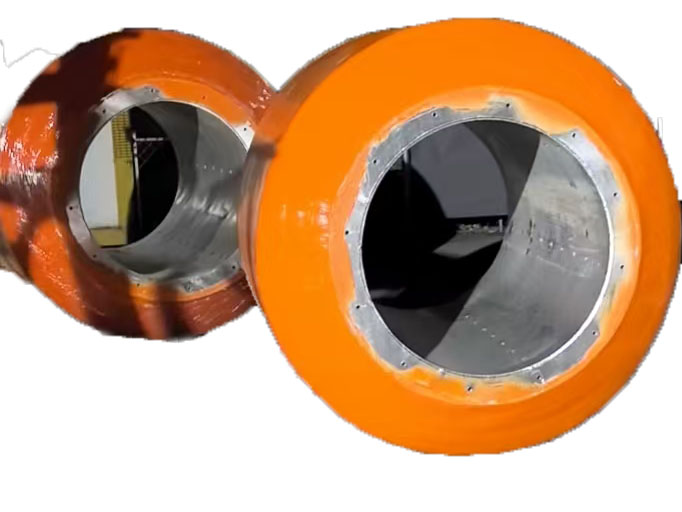
Donut Fenders
A donut fender, also known as a doughnut fender or toroidal fender, is a ring-shaped marine fender with a circular cross-section and a hollow center. It slides onto a pile, dolphin, piling, or mooring post and absorbs berthing energy from vessels approaching from any direction. Thanks to its 360-degree impact zone and central aperture, a donut fender is one of the most versatile fender types used in ports, marinas, and offshore installations.
This guide covers everything you need to know about donut fenders: definition, how they work, materials, sizes, types, applications, advantages, installation, and selection tips.
How Does a Donut Fender Work?
A donut fender works by deforming elastically when a vessel makes contact, converting the kinetic energy of the berthing vessel into elastic deformation. The ring shape compresses and deflects, distributing the load evenly around the circumference. Once the vessel moves away, the fender returns to its original shape, ready for the next impact.
Key working principles:
- 360-degree protection: the ring can absorb impacts from any angle around the pile.
- Uniform load distribution: forces are spread evenly around the torus, reducing stress points.
- Central aperture: the hole lets the fender slide over a pile or shaft, locking it in place.
- Elastic recovery: high-quality rubber returns to shape after each compression, enabling long service life.
Types of Donut Fenders
Donut fenders vary by material and construction:
- Solid rubber donut fenders: molded from a single piece of rubber; extremely durable.
- Pneumatic donut fenders: air-filled, offering higher energy absorption with lower reaction force.
- Foam-filled donut fenders: lightweight, unsinkable, often with a tough polyethylene shell.
- Chain-tyre net donut fenders: reinforced with a tyre or chain net for heavy-duty offshore use.
Common Materials Used in Donut Fenders
| Material | Key Benefits | Typical Use |
| Natural/SBR rubber | High elasticity, good abrasion resistance | General marine fendering |
| EPDM rubber | Excellent weather and ozone resistance | Outdoor, long-service projects |
| Polyurethane | High load-bearing, wear-resistant | Heavy-duty / industrial berthing |
| Foam + PE shell | Lightweight, unsinkable, low maintenance | Marinas, floating docks |
Advantages of Donut Fenders
The donut (toroidal) shape offers practical benefits that explain its popularity in marine fendering:
- Omnidirectional protection: one fender shields a pile from all sides.
- Even stress distribution: the ring shape avoids localized hot spots and premature wear.
- Easy installation: slides over a piling and is secured with a retaining plate or collar.
- Low maintenance: molded rubber designs have no air valves or moving parts to service.
- High energy absorption: a large contact surface compresses progressively under load.
Applications of Donut Fenders
Donut fenders are used wherever vessels berth against piles or dolphins. Common applications include commercial ports and cargo terminals, marinas and yacht clubs, fishing harbors, offshore platforms, lock walls, and floating dock systems. They are especially valuable at corners and bends where vessels may approach from changing angles.
Common Donut Fender Sizes and Dimensions
Donut fenders are sized by their outer diameter, inner bore, and thickness. Typical ranges vary by manufacturer, but common outer diameters span from a few hundred millimeters for small marina piles up to over a meter for heavy commercial berthing. Always match the inner bore to your piling diameter and confirm the outer diameter delivers the required energy absorption for your vessel size.
How to Choose the Right Donut Fender
Selecting the correct donut fender means matching the product to your berthing conditions:
- Vessel size and displacement: larger vessels require higher energy absorption and larger diameters.
- Pile diameter: the inner bore must fit your piling with the correct clearance.
- Berthing angle: donut fenders excel where approach angles vary; verify the contact geometry.
- Material and climate: choose EPDM or polyurethane for harsh weather and UV exposure.
- Installation method: confirm retaining collar, plate, or chain arrangement with the supplier.
Donut Fender Installation and Maintenance
Installation is straightforward: slide the donut fender over the pile and secure it at the desired height with a retaining plate, collar, or chain. For maintenance, inspect periodically for cuts, abrasions, or compression set, check retaining hardware for corrosion, and replace any fender showing significant permanent deformation or cracking.
Frequently Asked Questions
What is the difference between a donut fender and a cylindrical fender?
A donut fender is a ring that slides over a single pile and protects it from all sides, while a cylindrical fender is a straight bumper mounted along a wall or edge. Donuts are ideal for piles and dolphins; cylinders suit continuous wall fendering.
How long does a donut fender last?
Service life depends on material, exposure, and impact frequency. Quality rubber donut fenders in normal marine conditions often last many years; EPDM and polyurethane grades extend life in harsh, sunny, or heavily used environments.
Can donut fenders be used offshore?
Yes. Heavy-duty pneumatic or foam-filled, chain-tyre-net-reinforced donut fenders are commonly used offshore where wave action and vessel movement are severe.
