

Cone Rubber Fenders: Complete Guide to Selection, Performance and Installation
What Are Cone Rubber Fenders?
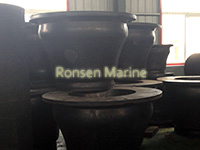
Cone Rubber Fenders
Cone rubber fenders are solid, compression-type marine fenders designed to absorb the kinetic energy generated when a vessel berths. Their conical shape distributes impact forces through the rubber body while maintaining a relatively stable reaction force. For port operators, shipowners, and marine contractors, the objective is not simply to install a large rubber bumper. A correctly selected fender system must protect both the vessel hull and the berth structure without exceeding the allowable reaction force, hull pressure, or mooring load.
Cone fenders are commonly considered for container terminals, bulk-cargo berths, tanker terminals, RoRo facilities, cruise terminals, dolphin structures, and other medium- to large-vessel applications. They are particularly relevant where berthing energy, vessel size, tidal movement, and approach angle must be evaluated together.
How Cone Fenders Work
When a vessel makes contact with the fender, the rubber body compresses and deforms. The system converts part of the vessel’s kinetic energy into elastic deformation and controlled rebound. The remaining energy is dissipated as heat.
The effectiveness of the system depends on more than the rubber itself. The mounting structure, anchor system, frontal panel, face pad, chains, and the distribution of fender units along the quay all influence performance.
Three values are central to selection:
- Berthing energy: the energy that the fender system must absorb.
- Reaction force: the force transferred to the vessel, fender, and berth structure.
- Hull pressure: the contact pressure between the fender or frontal panel and the ship’s hull.
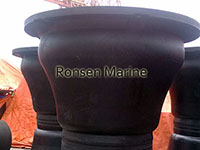
Super cone rubber fenders
A cone fender may offer high energy absorption but still be unsuitable for a project if the reaction force exceeds the quay structure’s design limit or the hull pressure exceeds the vessel’s allowable value. This is why catalogue data alone is not enough for a safe specification.
Why Buyers Evaluate Cone Rubber Fenders
1. Energy Absorption Relative to Reaction Force
Cone rubber fenders are often selected when the project requires substantial energy absorption without transferring excessive force to the berth or vessel. Their geometry can make them suitable for applications where low reaction force and angular stability are important.
However, “low reaction force” is not a universal claim. It must be interpreted from the manufacturer’s performance curve for the exact size, rubber grade, deflection, temperature, and contact angle. A value taken from a similar product cannot be applied to a different configuration.
2. Performance at Different Contact Angles
A key consideration is how the fender performs when the vessel does not approach perfectly square to the berth. The conical geometry is generally associated with more stable behaviour under angular contact than some conventional solid-fender shapes.
This makes cone fenders relevant for facilities with ferry traffic, variable approach directions, tidal movement, or mixed vessel types. Even so, the acceptable angle must be confirmed using the supplier’s tested performance data rather than a general product description.
3. Compatibility with Frontal Systems
Cone fenders are often used with a frontal frame and face pad. The frontal system helps distribute contact pressure and can reduce direct friction between the rubber and the hull.
A UHMW-PE front panel is frequently specified because it can help reduce surface friction during sliding contact. The chain system, support arrangement, and panel dimensions must be designed for the project’s expected shear, vertical movement, and berthing conditions.
Cone Fenders vs Other Marine Fender Types
There is no single “best” fender for every berth. Selection must begin with vessel and berth data.
| Fender type | Typical consideration | Common limitation |
| Cone fender | Angular stability, energy absorption, reaction-force control | Usually requires careful engineering and installation |
| Cell fender | Large fixed berths and high-energy applications | Geometry and mounting requirements differ |
| Arch fender | Smaller berths, corners, and space-sensitive locations | Lower energy capacity than large cone or cell systems |
| Cylindrical fender | General-purpose, hanging or pile protection | Often less suitable for large-vessel energy absorption |
| Pneumatic fender | Ship-to-ship transfers, temporary operations, floating applications | Requires pressure management and different handling |
A cone fender should not automatically be specified because it appears technologically advanced. If the berthing energy, reaction force, hull pressure, or mooring arrangement is not calculated, the selected type may be either undersized or unnecessarily expensive.
Common Applications
Cone rubber fenders may be evaluated for:
- Container terminals
- General cargo and bulk-cargo berths
- Oil, gas, and chemical tanker facilities
- RoRo and ferry terminals
- Cruise-ship berths
- Dolphins, piles, and mooring structures
- Multi-user terminals with different vessel types
- Locations with significant tidal variation or angular berthing
The presence of large vessels does not by itself determine suitability. A proper selection must also consider vessel displacement or deadweight, approach speed, contact angle, tidal range, quay strength, hull shape, and mooring configuration.
Key Selection Parameters
Berthing Energy
Berthing energy depends on vessel mass, approach velocity, eccentricity, mooring conditions, and other site-specific factors. It should be calculated or reviewed by a qualified engineer using an appropriate method for the project.
Never select a cone fender only by height, diameter, or catalogue energy. The published value must correspond to the correct deflection, contact angle, temperature, and test method.
Reaction Force
Reaction force is the force developed as the fender compresses. It must remain within the design limits of:
- the vessel hull;
- the fender body;
- the anchor bolts and supporting structure;
- the quay or dolphin;
- the chains and tensioning system.
If the reaction force is too high, a larger or lower-reaction version may be required even when the energy-absorption value appears adequate.
Hull Pressure
The contact area between the fender system and the hull affects hull pressure. A frontal panel and properly dimensioned face pad can spread the load, but the arrangement must match the vessel’s allowable hull pressure.
Small contact areas may concentrate force on the hull. Large panels may introduce additional costs, require more robust mounting, and change the fender’s effective geometry.
Berthing Angle
Cone fenders are often selected for angled berthing, but “angular performance” is not unlimited. Buyers should request performance-correction information for the actual contact angles expected at the berth.
Tidal Range and Vertical Movement
Tides, vessel draft, and fender-panel geometry can create vertical movement and shear forces. The chain arrangement and fender mounting must accommodate the predicted range without causing excessive twist, uneven loading, or panel lift-off.
Environmental Conditions
Temperature, ultraviolet exposure, ozone, salt water, oil exposure, and abrasion can affect rubber performance. The rubber compound and accessory materials should be selected for the actual operating environment.
Materials and Construction
Cone fenders are generally manufactured from marine-grade rubber compounds. Natural rubber, SBR, or blended compounds may be used depending on the design, cost target, and operating environment. The compound should not be selected only by hardness. Tensile strength, elongation, compression set, ozone resistance, and ageing characteristics can also be relevant.
Steelwork may include:
- mounting plates;
- anchor bolts;
- frontal frames;
- support chains;
- shackles and tensioning components;
- UHMW-PE face pads.
For corrosive environments, hot-dip galvanizing, stainless-steel components, or other protective systems may be specified. The correct choice depends on salt exposure, maintenance access, design life, and project budget.
Front Panels and UHMW-PE Face Pads
A frontal system is not automatically required for every installation, but it is common in cone-fender projects because it can:
- increase the effective contact area;
- help reduce hull pressure;
- reduce direct friction between the rubber and vessel;
- protect the fender from localized abrasion;
- allow the face pad to be replaced separately in some designs.
Buyers should confirm whether the frontal panel is included in the quoted price, whether it is pre-assembled, and how spare pads are supplied. The bolt pattern, panel thickness, chain arrangement, and installation tolerances should also be checked.
Installation Considerations
Cone-fender performance depends on correct installation. Before installation, the following should be reviewed:
- concrete strength and anchor embedment;
- bolt size, grade, and torque requirements;
- alignment of the fender body and mounting surface;
- frontal-panel squareness and contact alignment;
- chain length and adjustment;
- clearance for compression and tidal movement;
- corrosion protection of steel components;
- compatibility with the quay’s structural drawings.
Installation should follow the manufacturer’s approved drawings and the project’s engineering specifications. If field conditions differ from the design, the deviation should be documented and reviewed before continuing.
Inspection and Maintenance
A maintenance programme can help identify wear before it leads to operational failure. Depending on site conditions, inspections may include:
- cracks, cuts, or permanent deformation in the rubber;
- movement or loosening of anchor bolts;
- corrosion of chains, shackles, frames, or bolts;
- wear of the UHMW-PE face pad;
- damage caused by vessel impact outside the design envelope;
- marine growth or debris around the fender base;
- uneven loading across adjacent fenders.
The inspection interval should be based on berthing frequency, vessel type, environmental exposure, and the results of previous inspections. High-traffic terminals generally require more frequent checks than low-use facilities.
Standards, Testing, and Verification
Cone-fender performance may be described using recognized testing and reporting principles. PIANC guidance is frequently referenced for determining and reporting marine-fender performance, while ISO 17357 is particularly associated with floating pneumatic rubber fenders rather than all solid-rubber cone fenders. Buyers should therefore verify which standard or guidance applies to the exact product being purchased.
A credible technical package may include:
- rated performance data or load-deflection curves;
- energy-absorption and reaction-force values at defined deflection;
- velocity and temperature correction factors where applicable;
- contact-angle correction data;
- rubber-compound test reports;
- dimensional inspection records;
- factory acceptance test documentation;
- third-party witnessing or classification-society involvement where specified.
The availability of these documents varies by manufacturer and project. Their absence does not automatically prove poor quality, but important performance values should not be accepted without adequate evidence.
Questions to Ask Before Requesting a Quotation
To receive an accurate cone-fender proposal, send the supplier the following information:
- Vessel type and maximum dimensions.
- Vessel displacement or deadweight.
- Normal and maximum berthing velocity.
- Expected contact angle.
- Tidal range and water level.
- Berth layout and fender spacing.
- Design berthing energy, if already calculated.
- Allowable reaction force and hull pressure.
- Quay structure and anchor details.
- Required rubber compound and environmental conditions.
- Front-panel, UHMW-PE pad, and chain requirements.
- Delivery location, quantity, and project schedule.
- Required certificates, test reports, and inspection scope.
The more complete the project data, the easier it is for a manufacturer to provide a comparable technical quotation rather than a generic price.
RFQ Checklist
Before placing an order, verify:
- [ ] the fender type and size match the calculated berthing energy;
- [ ] reaction force is within structural and hull limits;
- [ ] hull-pressure requirements have been checked;
- [ ] angular, velocity, and temperature corrections are available;
- [ ] the rubber compound matches the operating environment;
- [ ] mounting hardware and structural design are compatible;
- [ ] the frontal-panel and face-pad arrangement is confirmed;
- [ ] chain length and adjustment range suit the tidal conditions;
- [ ] material, dimensional, and performance documentation is specified;
- [ ] inspection, testing, packing, and delivery terms are clear;
- [ ] spare parts and after-sales support are available if required.
Final Selection Advice
Cone rubber fenders can be a strong option when a project needs stable energy absorption, controlled reaction force, and reliable performance under angular contact. They are not, however, a universal solution. The safest and most cost-effective specification comes from matching the fender to the vessel, berth, environmental conditions, and structural limits—not from selecting a product based on a single performance number or the lowest price.
For new terminals, upgrades, or replacement projects, request a technical review that includes the complete performance curve and project-specific calculations. A quotation based only on product dimensions cannot confirm whether the system will perform safely under real berthing conditions.
Request a technical quotation: send your vessel details, berth layout, design energy, tidal range, and required documentation. A qualified supplier should provide a selection proposal, performance data, and clarification of any assumptions before production.
