

What Is an Anchor Pendant Buoy? A Complete Guide to Types, Functions, and Selection
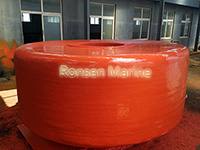
Anchor Pendant Buoys
What Is an Anchor Pendant Buoy?
An anchor pendant buoy is a robust, buoyant float engineered to work inside a mooring or anchor system. Its job is to support the weight of the anchor chain or rope — known as the pendant — lifting it up from the seabed so it does not drag, chafe, or snag on rocks, wreckage, and debris. At the same time, the buoy acts as a highly visible surface marker, giving the crew a clear reference point for locating and retrieving the anchor.
Unlike a simple marker float, a pendant buoy is a load-bearing component of the ground tackle. It sits between the anchor and the vessel, absorbing dynamic forces and keeping the rode clear of the bottom. In short: the anchor holds the system down, and the anchor pendant buoy holds the rode up.
Quick Answer: What Does an Anchor Pendant Buoy Do?
An anchor pendant buoy supports the anchor rode at or near the water surface. It prevents the chain or rope from lying directly on the seabed, which reduces abrasion, tangling, and anchor drag. It also provides a bright visual reference for safe mooring and retrieval.
How an Anchor Pendant Buoy Works

Suitcase anchor pendant buoys
The working principle is straightforward. The buoy is fixed to the anchor rode with rated hardware — typically a pad eye, shackle, swivel, or handling crucifix on the internal steel frame. The buoyant core generates an upward force that partially supports the submerged weight of the chain or rope. This creates a catenary shape in the rode: the anchor digs in at the bottom, the buoy lifts the middle section, and the vessel rides at the upper end.
In calm conditions, the buoy sits upright and marks the mooring position. In waves and current, the resilient foam core flexes instead of rupturing, while a swivel arrangement prevents the rode from twisting the buoy body. The result is a mooring system that is easier to inspect, retrieve, and redeploy.
Key Functions of an Anchor Pendant Buoy
- Rode support: lifts the chain or rope off the seabed, cutting wear and extending service life.
- Abrasion protection: keeps the rode clear of rocks, silt, and underwater obstacles.
- Mooring stability: reduces friction on the bottom and limits anchor drag in wind and current.
- Visual identification: high-visibility orange or yellow skin makes the anchor point easy to spot.
- Retrieval aid: gives the crew a handling point for hooking, picking up, and recovering the anchor.
- Impact absorption: the self-fendering foam body cushions collisions with the vessel and other gear.
Main Types of Anchor Pendant Buoys
Anchor pendant buoys come in several shapes and build formats, each suited to a different operating environment. The three main support-buoy types used in single-point mooring (SPM) systems are cylindrical buoys, chain-through buoys, and pick-up buoys. Beyond those, the buoys are also classified by their construction format.
1. Cylindrical Anchor Pendant Buoys
A cylindrical pendant buoy has a round, barrel-like shape built around an internal central steel frame. The frame carries the load through support branches so the foam core cannot shift. This shape offers a good balance of buoyancy, stability, and handling, and is widely used in coastal and offshore mooring.
2. Chain-Through Buoys
A chain-through buoy has a central tube that allows the anchor chain to pass right through the body. A locking device at one or both ends secures the buoy to the chain at a set position. This arrangement is common in single-point mooring systems where the buoy must stay fixed along the rode.
3. Pick-Up Buoys
Pick-up buoys are general-purpose units used for mooring, marking, and pick-up duties. Their simple end-fitting layout makes them easy to connect to a pendant line, which is why they are often chosen for day-to-day anchoring and retrieval work.
4. Suitcase, Modular, and Non-Modular Builds
- Suitcase (rectangular) buoy: a flat-top, rectangular body that stacks and stores efficiently on an anchor-handling vessel.
- Modular buoy: made from removable, interchangeable end and centre modules assembled on a central steel structure. Net buoyancy can be adjusted by adding or removing centre modules.
- Non-modular (one-piece) buoy: a single, sealed body for straightforward mooring duties where a fixed buoyancy rating is sufficient.
Anchor Pendant Buoy Construction and Materials
A typical anchor pendant buoy is built as a composite of four elements: a buoyant core, a protective skin, an internal steel frame, and the end fittings that connect it to the rode.
| Component | What It Does | Typical Material |
| Foam core | Generates buoyancy and absorbs impact; stays afloat even if punctured | Closed-cell polyethylene (PE) or EVA foam |
| Outer skin | Protects the core from abrasion, UV, and impact damage | Polyurethane (PU) elastomer, often nylon-reinforced |
| Internal steelwork | Transfers the load and prevents the core from moving | Central tube, gussets, flanges; galvanized or coal-tar epoxy painted |
| End fittings | Connects the buoy to chain, wire, or rope | Pad eye, handling crucifix, padeye, swivel, bows |
Why Closed-Cell Foam Matters
The resilient closed-cell PE/EVA foam core is the reason a pendant buoy is described as unsinkable. Even if the outer skin is punctured, the core does not absorb water, so the buoy retains positive buoyancy and continues to support the rode. This also gives the buoy a high impact-absorption capacity, which is why the design is described as self-fendering.
Why the Skin and Steelwork Matter
The PU elastomer skin is selected for abrasion resistance, fatigue resistance, and resistance to ultraviolet degradation — it lasts significantly longer than the polyethylene used in rotationally moulded buoys. In extreme service environments the skin can be reinforced with nylon filament to raise tear strength. The central steelwork, meanwhile, is normally blast cleaned and coal-tar epoxy painted, or hot-dip galvanized for the swivel assembly.
Common Applications of Anchor Pendant Buoys
- Single-point mooring (SPM) systems for tanker loading and offloading
- Permanent and temporary moorings in harbours, marinas, and exposed coastal waters
- Anchor handling and anchor retrieval during pipe-laying and offshore construction
- Commercial fishing, workboat, and pilot vessel moorings
- Work barges, dredging, lightering, and ship maintenance berths
- Aquaculture, navigation marking, and marine research installations
- Renewable energy projects, including wind-farm support operations
Anchor Pendant Buoy Size and Buoyancy Chart
Anchor pendant buoys are usually specified by their net (reserve) buoyancy, which is the weight of water displaced by the buoy when fully immersed, less the buoy’s own weight in air. Modular designs commonly range from about 1 tonne to 100 tonnes of net buoyancy. The table below lists representative sizes for cylindrical pendant buoys.
| Model | Diameter (mm) | Overall Height (mm) | Net Buoyancy (kg) |
| CAPB-1 | 1,300 | 1,950 | 1,000 |
| CAPB-2 | 1,750 | 1,950 | 2,000 |
| CAPB-3 | 1,860 | 2,200 | 3,000 |
| CAPB-5 | 1,930 | 3,245 | 5,000 |
| CAPB-8 | 2,400 | 3,245 | 8,000 |
| CAPB-10 | 2,400 | 3,900 | 10,000 |
| CAPB-20 | 3,150 | 4,350 | 20,000 |
How to Choose the Right Anchor Pendant Buoy
Sizing is not guesswork: the buoy’s buoyancy rating must exceed the total submerged weight of the anchor chain or pendant it is intended to support. Use the steps below to narrow the choice.
- Calculate submerged line weight: multiply chain or rope length by its weight in water, and add the load of any hardware and clump weights.
- Add a safety margin: choose a buoy whose net buoyancy exceeds that submerged load, so it can still support the rode under dynamic conditions.
- Match the fitting to the rode: select a pad eye or padeye for chain, a through-hawse arrangement for anchor wire, or a swivel for applications with high rotation.
- Match shape to storage: pick a suitcase buoy when deck space is tight, a modular buoy when buoyancy needs may change, and a cylindrical buoy for a stable all-round profile.
- Match coating to the environment: use reinforced nylon-filament PU skin in extreme environments, and choose bright orange or yellow for maximum daytime conspicuity.
- Account for water type: ratings are normally based on seawater at a specific gravity of about 1.025; buoyancy in freshwater is approximately 2.5% greater.
Anchor Pendant Buoy vs. Mooring Buoy: What Is the Difference?
The two terms overlap, but they are not interchangeable. A mooring buoy is the general class of floating body used to mark a mooring point and secure a vessel. An anchor pendant buoy is a specific type of support buoy whose primary role is to support the anchor rode itself. In other words, every anchor pendant buoy can be used as part of a mooring system, but not every mooring buoy is built to carry the load of an anchor chain.
Maintenance and Inspection Checklist
- Inspect the skin for punctures, tears, and abrasion, especially after recovery operations.
- Check the steelwork and fittings for corrosion, cracks, and deformation.
- Verify that shackles, pins, and swivels are seated and secured before each deployment.
- Rinse salt deposits from the surface and repaint or repair coating damage promptly.
- Confirm the actual buoyancy against the rated net buoyancy after a long service period.
- Store suitcase and modular units in a dry, ventilated area away from sharp objects and direct oil contact.
Frequently Asked Questions About Anchor Pendant Buoys
Below are the questions buyers and crew members ask most often.
What is the difference between reserve buoyancy and net buoyancy?
The terms are used interchangeably for pendant buoys. Net (or reserve) buoyancy is the weight of water displaced when the buoy is fully immersed, minus the buoy’s own weight in air — in simple terms, it is the useful lifting force left over after the buoy’s own weight has been accounted for.
Can an anchor pendant buoy sink if the skin is damaged?
A properly built foam-filled pendant buoy will not sink if the skin is punctured. Its closed-cell PE/EVA core does not absorb water, so it retains positive buoyancy even when the outer skin is breached.
Can modular anchor pendant buoys be reconfigured for a new project?
Yes. Modular buoys use removable, interchangeable end and centre modules on a central steel structure. Adding or removing centre modules changes the net buoyancy, so one set can often be redeployed across projects with different requirements — the end flanges are welded in place, then ground away and refitted if the module count changes.
Are anchor pendant buoys suitable for freshwater as well as seawater?
Yes. The buoyancy of a given buoy in freshwater is approximately 2.5% greater than in seawater because freshwater has a lower specific gravity. That margin should be treated as a small bonus rather than a reason to downsize the buoy.
What colour should an anchor pendant buoy be?
Standard colours are bright yellow and international orange, chosen for daytime visibility. For night or low-light identification, optional extras include reflective tape bands, navigation lights, and internal radar reflectors.
Key Takeaways
- An anchor pendant buoy is a load-bearing flotation device, not just a marker float.
- It lifts the anchor chain or rope off the seabed, reducing abrasion, tangling, and anchor drag.
- The most common types are cylindrical, chain-through, and pick-up buoys, in suitcase, modular, or non-modular builds.
- Closed-cell foam makes the buoy unsinkable even after skin damage, while PU skin and steelwork carry the working load.
- Always size by net buoyancy against the submerged weight of the rode, and leave a safety margin for dynamic conditions.
