

Ship Launching Airbag: What It Is, How It Works, Types, and Selection Guide
Introduction
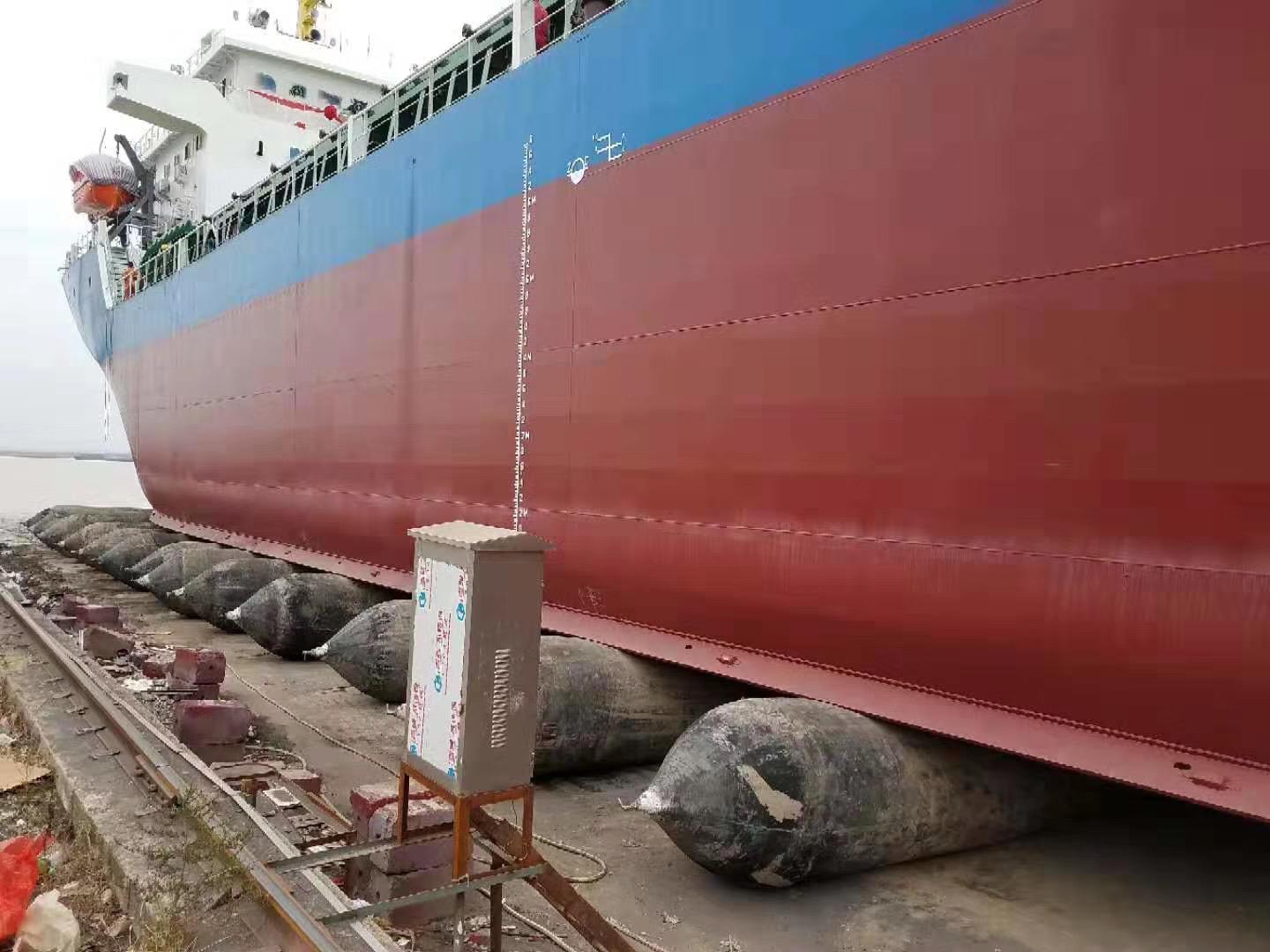
Ship Launching Airbags
A ship launching airbag is a heavy-duty, cylindrical rubber airbag used to move and launch vessels. It is placed between the hull and the ground. As it is inflated, it lifts the vessel and rolls along with it as the vessel slides into the water.
First developed in China in the 1980s, the marine airbag launching method has become a low-cost, flexible alternative to traditional slipways and cranes. It is now widely used in shipyards, fishing boat yards, and for salvage and vessel recovery work.
This guide covers the structure and working principle of ship launching airbags, the main types, how to select the right size, and how to use and maintain them safely.
What Is a Ship Launching Airbag?
A ship launching airbag is a reinforced rubber cylinder filled with compressed air. It works like a rolling, inflatable support that carries the weight of the vessel.
Structure of the Airbag Body
1.Inner rubber layer
- An airtight layer that prevents air leakage.
- Usually made from natural rubber or butyl rubber.
2.Synthetic cord reinforcement layers (tyre cords)
- The core of the airbag’s strength.
- High-strength nylon or polyester cords are wound at designed angles in multiple layers.
- The number of layers, usually 4 to 12, determines the working pressure and load capacity.
3.Outer rubber layer
- A wear-resistant layer in contact with the hull and the ground.
- Resistant to abrasion, seawater, UV, and fatigue from repeated rolling.
4.End caps and valves
- Steel or rubber end caps fitted with inflation valves.
- Air hoses connect the airbag to an air compressor or manifold.
5.Protective covers (optional)
- Fabric or rubber sleeves that protect the body from sharp objects and rough ground.
Ship airbag
How Does a Ship Launching Airbag Work?
The working principle combines air compression and rolling movement:
- Placement – Deflated airbags are laid flat on the ground under the vessel keel at even intervals.
- Inflation and lifting – The airbags are inflated evenly. As they expand, they lift the vessel off its blocks or cradle.
- Rolling launch – The vessel is released and begins to move down the slipway under gravity. The airbags roll along with the hull, so sliding friction becomes rolling friction. This greatly reduces the force needed to move the vessel.
- Entry into the water – The vessel floats free, and the airbags are deflated and recovered for the next job.
Load capacity reference:
Total lifting capacity ≈ Number of airbags × Working load per airbag
Working load depends on:
- Airbag diameter – larger diameter means greater bearing area.
- Effective length – the part actually in contact with the hull.
- Working pressure – higher pressure means greater load capacity.
- Number of cord layers – more layers allow higher working pressure.
Always follow the load tables provided by the manufacturer and never exceed the stated working pressure.
Key Advantages
- Low infrastructure cost – no need for a permanent slipway or expensive crane.
- Flexible – one set of airbags can handle vessels of different sizes and can be moved between sites.
- Gentle on the hull – the airbags spread the load evenly and adapt to the hull shape.
- Quick to deploy – setup can be completed in hours rather than days.
- Reusable – with proper care, airbags can be used for many launches.
- Suitable for remote sites – ideal for small yards and island or river locations.
Common Types of Ship Launching Airbags
| Type | Feature | Typical use |
| Standard launching airbag | High-strength cord layers, robust outer rubber | New-build launching, vessel movement |
| High-pressure airbag | Moore cord layers, smaller diameter | Heavy vessels, limited space |
| Salvage / recovery airbag | Tougher cover, often cstom sizes | Refloating grouded or sunken vessels |
| Roller / moving airbag | Shorter length, designed for repeated rolling | Moving vessels on land, dry-dock transfer |
Common Applications
- Launching newly built vessels – fishing boats, tugboats, barges, yachts, and small-to-medium ships
- Hauling out and dry-docking
- Moving vessels on land – transferring ships between building berths and repair yards
- Vessel salvage and refloating
- Emergency recovery of grounded vessels
- Heavy-load transport – moving large precast concrete or steel structures on land
How to Select the Right Ship Launching Airbag
Selection is usually based on the following five factors:
- Vessel weight – the total lifting capacity of all airbags must exceed the vessel weight with a suitable safety margin.
- Vessel length and hull shape – determines how many airbags are needed and how they are spaced.
- Slipway slope and ground conditions – affects the rolling force and the required wear resistance.
- Available air supply – compressor capacity must match the total air volume needed.
- Working pressure and cord layers – 4–6 layers for light vessels, 8–12 layers for heavy vessels.
Most reputable suppliers calculate requirements according to CB/T 3795, the Chinese industry standard for marine airbags. Always ask for a launching plan and load calculation before use.
Common Size Reference
| Airbag diameter | Typical use |
| 0.8 -1.0 m | Small booats, fishing vessels |
| 1.2 - 1.5 m | Medium vessels, tugboats, barges |
| 1.8 -2.0 m | Large vessels, heavy lifting |
| 2.0 m and above | Very heavy or custom projects |
Length usually ranges from 6 to 20 metres or more. The table above is only a general guide. Actual selection must be based on load calculations.
Installation and Launching Procedure
A typical airbag launching follows these steps:
- Prepare the slipway – clear debris, level the ground, and check the slope.
- Position the airbags – place deflated airbags evenly under the keel, clear of keel blocks and fittings.
- Connect the air supply – link the airbags to the compressor through a manifold, with valves on each airbag.
- Inflate evenly – inflate all airbags at the same rate so the vessel rises evenly.
- Remove the blocks – take away the keel blocks and cradle once the vessel is fully supported by the airbags.
- Release and launch – release the vessel and control its speed with the stern line or a winch as it rolls down the slope.
- Recover the airbags – deflate, clean, and store them after the vessel floats free.
Safety and Maintenance
- Never exceed the working pressure stated on the airbag.
- Inflate evenly – uneven inflation can cause the vessel to tilt or the airbags to shift.
- Keep the slipway clear of sharp objects, stones, and metal debris.
- Control the launch speed with lines or a winch to prevent the vessel from running away.
- Inspect before each use:
Check for cuts, abrasions, and exposed cord.
Check the end caps, valves, and hoses for leaks and damage.
Check the air pressure during lifting.
- After use:
Wash off sand, salt, and mud with fresh water.
Dry the airbag before storage.
Store in a shaded, dry place away from oil, chemicals, and rodents.
- Repair minor damage with cold-bonded rubber patches. Replace the airbag if the cord layer is exposed or broken.
With proper care, ship launching airbags typically last 6–10 years and can be reused for many launches.
Common Mistakes to Avoid
- Underestimating the vessel weight – too few airbags or too-low pressure can overload every airbag.
- Using too few airbags – this concentrates the load and can damage both hull and airbags.
- Uneven inflation – one of the most common causes of accidents during launching.
- Ignoring ground conditions – rough surfaces can quickly wear through the outer rubber.
- Not controlling the launch speed – an uncontrolled launch can damage the vessel and the equipment.
- Over-inflation – exceeds the design limit and risks bursting.
- Buying only on price – low price often means fewer cord layers and thinner rubber.
Frequently Asked Questions
Q: What is a ship launching airbag?
A: It is a reinforced rubber airbag filled with compressed air. It is placed under a vessel to lift it and roll it into the water during launching, hauling out, or vessel movement.
Q: How many airbags are needed to launch a ship?
A: It depends on the vessel weight, length, and hull shape. The total lifting capacity of all airbags must exceed the vessel weight with a suitable safety margin. Suppliers normally provide a load calculation.
Q: What pressure do ship launching airbags use?
A: Working pressure depends on the airbag diameter and the number of cord layers, and it is normally specified by the manufacturer. Never exceed the stated working pressure.
Q: Are ship launching airbags safe?
A: Yes, when they are correctly selected, evenly inflated, and used on a prepared slipway with the launch speed controlled. Most accidents are caused by uneven inflation, overloading, or poor ground conditions.
Q: Can ship launching airbags be reused?
A: Yes. With proper cleaning, inspection, and storage, airbags can be reused for many launches, with a typical service life of 6–10 years.
Q: Can they be used to refloat a grounded vessel?
A: Yes. Salvage and recovery airbags are often used to lift and refloat grounded or sunken vessels.
Conclusion
A ship launching airbag is a flexible, cost-effective way to launch, move, and recover vessels without a permanent slipway or crane. Its reinforced rubber body and compressed-air lifting action spread the load evenly along the hull, while rolling movement keeps the required force low.
When buying, base your choice on vessel weight, hull shape, slipway conditions, and a proper load calculation rather than guesswork. Even inflation, a clear slipway, controlled launch speed, and regular inspection are the keys to safe use and long service life.
