

What Is Rubber Rollers Airbag? A Complete Guide to Rubber Roller Airbags
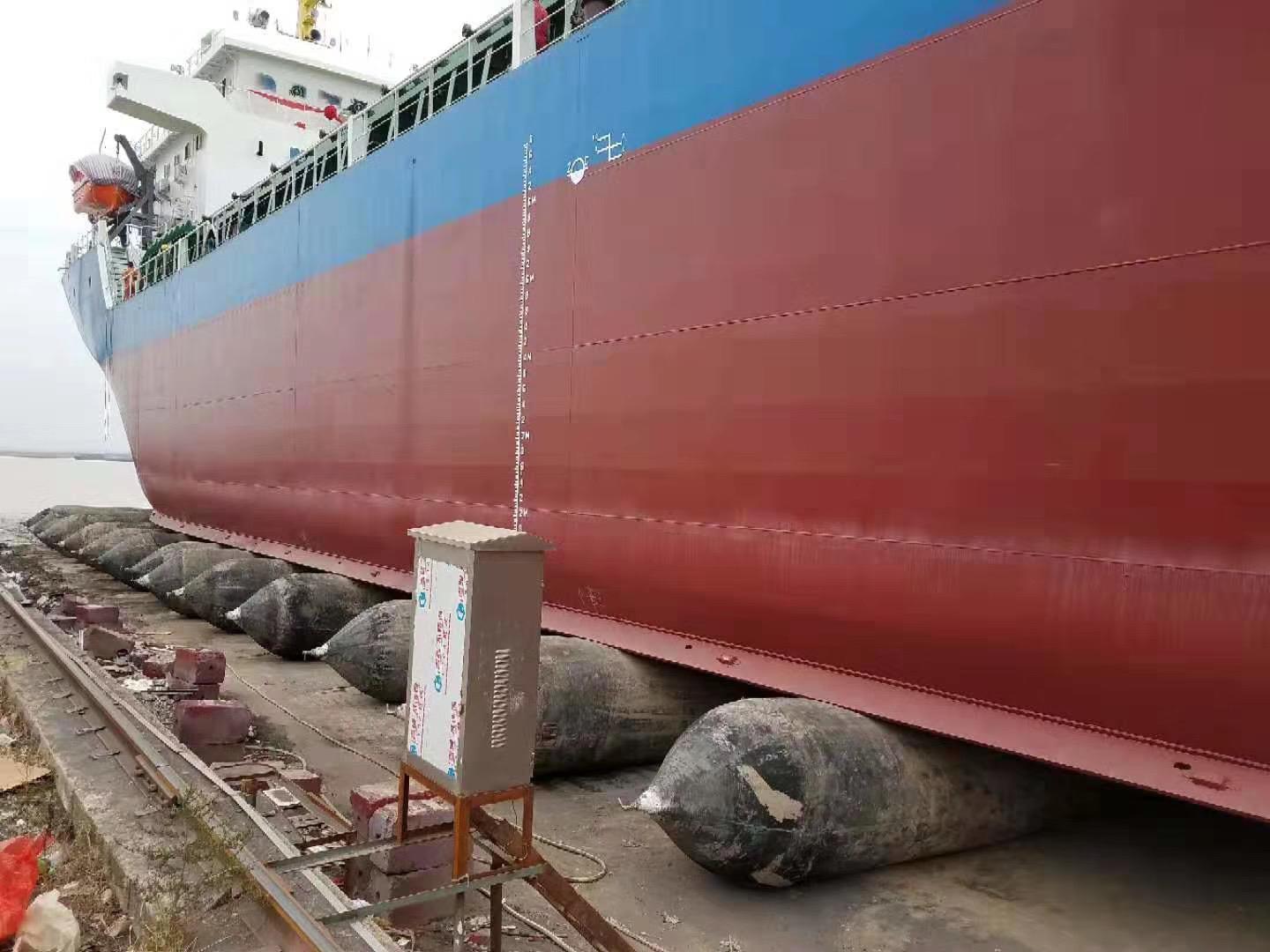
Rubber Rollers Bag
Rubber rollers airbag—also called rubber roller airbag, airbag roller, pneumatic roller bag, marine rubber airbag, or ship launching airbag—is an inflatable, heavy-duty cylindrical device made from high-tensile natural rubber and multilayer rubber-dipped tire cord fabric. It is used to lift, roll, launch, salvage, and move heavy objects such as ships, boats, barges, caissons, bridges, and industrial equipment.
In simple terms: a rubber roller airbag works like a giant inflatable roller. You place deflated airbags under a heavy load, inflate them with compressed air, and the load is lifted slightly off the ground. As the load moves forward, the airbags act as low-friction rollers, allowing safe and controlled movement without cranes, rails, or expensive slipways.
What Is a Rubber Roller Airbag?
A rubber roller airbag is a pneumatic cylindrical bag with:
- An inner rubber layer that holds air pressure
- A synthetic tire-cord reinforcement layer for strength
- An outer rubber layer resistant to abrasion, seawater, oil, and UV
- Metal end fittings / air valves for inflation and handling
Typical sizes:
- Diameter: 0.5 m – 3.0 m
- Effective length: 3 m – 28 m
- Working pressure: 0.05 – 0.25 MPa
- Cord layers: 4 – 12 plies
- Standards: ISO 14409, CB/T 3795, certified by ABS, DNV, BV, LR, CCS, etc.
How Does a Rubber Rollers Airbag Work?
- Prepare a clean, sloping or flat surface free of sharp objects.
- Place deflated airbag rollers under the vessel or cargo.
- Inflate the airbags with an air compressor.
- The load rises as air pressure increases.
- The airbags roll beneath the hull or cargo, moving it toward the water, dock, or next position.
Deflate, recover, and reuse the airbags.
Because the load rests on compressed air, impact and point-load damage are reduced. This makes rubber roller airbags ideal for soft ground, shipyards, beaches, ramps, and temporary launch sites.
Main Uses of Rubber Roller Airbags
1. Ship Launching
The most common use. Small and medium shipyards use rubber rollers airbags to launch vessels up to tens of thousands of DWT without fixed slipways.
2. Ship Landing / Haul-Out / Dry Docking
Airbags lift a vessel so it can be moved ashore for painting, hull repair, inspection, or maintenance.
3. Marine Salvage
Stranded or sunken boats can be floated, lifted, or rolled using salvage airbags.
4. Heavy Cargo Transportation
Caissons, box culverts, bridge girders, oil rig modules, and prefabricated concrete structures can be moved with airbag rollers.
5. Industrial Equipment Moving
Factories use rubber roller airbags to shift transformers, generators, tanks, and heavy machines where cranes are impractical.
6. Buoyancy & Floating Support
Airbags provide temporary buoyancy for pontoons, pipelines, subsea structures, and floating bridges.
Rubber Roller Airbag vs Traditional Methods
| Feature | Rubber Roller Airbag | Crane /Rail /Slipway |
| Capital cost | Low | High |
| Reusable | Yes | Limited |
| Ground requiirement | Simple, sloped flat | Fixed infrastructure |
| Setup time | Short | Long |
| Risk to hull | Low | Medium-High |
| Portability | High | Low |
That is why many shipyards, marine contractors, and heavy-transport companies prefer pneumatic roller airbags.
Key Advantages
- ✅ Reusable and portable
- ✅ Lower investment than dry dock or rail system
- ✅ Suitable for uneven or soft ground
- ✅ High load capacity per meter
- ✅ Reduced friction and impact
- ✅ Fast deployment
- ✅ Compliant with marine safety standards
- ✅ Custom diameters and lengths available
Rubber Roller Airbag Load Capacity
Load capacity depends on:
- Diameter
- Inflation pressure
- Working height
- Number of cord layers
- Contact length under the load
Example:
- D=1.0 m, pressure 0.14 MPa, working height 0.6 m → ≈ 87.96 kN/m ≈ 8.98 ton/m
- D=2.0 m, pressure 0.08 MPa, working height 0.6 m → ≈ 175.93 kN/m ≈ 17.95 ton/m
Engineers calculate the total number of airbags using vessel displacement, center of gravity, slope angle, and safety factor.
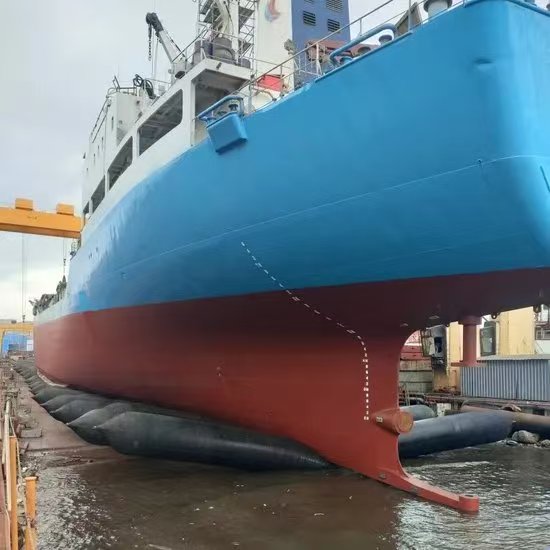
Inflatable Rubber Rollers
How to Choose the Right Rubber Rollers Airbag
- Know the total weight of the ship or cargo.
- Measure length, beam, and keel shape.
- Decide diameter: larger diameter = more clearance and smoother rolling.
- Choose cord layers: 6 layers for most jobs; 7–8+ for heavy caissons.
- Match effective length to hull width.
- Use ISO 14409-compliant airbags from a verified manufacturer.
Safety Tips
- Never inflate near sharp rocks, glass, or welding sparks.
- Keep air pressure within rated working pressure.
- Use pressure gauges and relief valves.
- Space airbags correctly under the hull.
- Train operators before launch.
- Inspect rubber surface, cord exposure, and valves before every use.
FAQ: Rubber Roller Airbag
Q: Are rubber rollers airbag and ship launching airbag the same thing?
A: Yes. “Rubber roller airbag” is a generic term; “ship launching airbag” describes the marine application.
Q: Can airbag rollers be reused?
A: Yes. With proper use and storage, quality marine airbags can be reused for many projects and last several years.
Q: What material is used?
A: High-tensile natural rubber + rubber-coated synthetic tire-cord fabric + metal air fittings.
Q: Do I need a dry dock?
A: No. That is the biggest advantage—airbag launching and haul-out can be done on prepared ground near water.
Conclusion
A rubber rollers airbag is a pneumatic, reusable, high-strength rubber roller used for ship launching, salvage, dry docking, heavy transport, and industrial lifting. It replaces expensive fixed infrastructure with a flexible, low-friction, air-supported system.
If you need custom rubber roller airbags, request diameter, length, layer count, working pressure, and ISO certification from the supplier before ordering.
Keywords: what is rubber rollers airbag, rubber roller airbag, airbag roller, marine rubber airbag, ship launching airbag, pneumatic roller bag, heavy load airbag, vessel salvage airbag.
