

Understanding Marine Equipment: A Practical Guide to Types, Systems and Specifications
Marine Equipments
Understanding marine equipment starts with one idea: every item bolted, welded or cabled onto a vessel exists to solve a specific problem—move the ship, keep it positioned, navigate safely, fight fire, handle cargo, or keep crew alive. Marine equipment is not a single product category but a layered system of machinery, electronics, safety appliances and deck hardware that must survive saltwater, vibration, temperature swing and class survey for 20–30 years.
This guide breaks marine equipment into functional groups, explains which IMO conventions and classification societies govern each group, and gives procurement and engineering teams a checklist to specify equipment without creating interface gaps during newbuild or retrofit.
What Does “Marine Equipment” Actually Cover?
In shipbuilding and ship management, the term splits into two overlapping scopes:
- Marine machinery – the mechanical and electromechanical backbone: main engine, shafting, generators, pumps, compressors, steering gear, boilers.
- Marine equipment – auxiliary and operational systems: navigation, communication, lifesaving, firefighting, mooring, cargo handling, automation, fenders, valves, sensors.
A chief engineer thinks in machinery; a superintendent thinks in equipment; a class surveyor thinks in certificates. Understanding marine equipment means seeing all three views at once.
Core Categories of Marine Equipment
1. Propulsion and Power Generation
- Main diesel engine / dual-fuel engine, shaft, gearbox, propeller, azimuth thruster
- Diesel generators, shaft generators, switchboards, battery/hybrid interfaces
- Fuel oil treatment, lube oil separators, cooling water systems
Marine Equipment
Class touchpoint: DNV/ABS/LR/CCS verify shaft alignment, generator overload capacity, and blackout recovery sequence.
2. Navigation and Communication (NavCom)
- Radar, ECDIS, gyrocompass, AIS (Class A for ≥300 GT), VHF, GMDSS console, BNWAS
- GNSS/DGNSS, autopilot, depth sounder, voyage data recorder (VDR)
Governed by SOLAS Chapter V and ITU/RR; equipment must sit on the manufacturer’s IMO MED (Marine Equipment Directive) type-approval list for EU-flagged vessels.
3. Safety and Lifesaving Appliances (LSA)
- Lifeboats, liferafts, EPIRB, SART, pyrotechnics, immersion suits
- Fire detection, CO₂/water-mist systems, fire pumps, emergency shutdown valves
SOLAS Chapter II-2 (fire) and Chapter III (life saving) drive the spec; each item carries a MED wheel mark or flag-state equivalent.
4. Deck and Cargo Handling Equipment
- Mooring winches, windlass, anchors, fairleads, hydraulic cranes, hatch covers
- Tanker cargo pumps, LNG cryogenic valves, bulk grizzly feeders, container lashing gear
Selection is driven by vessel type: a VLCC deck plan shares almost nothing with a Ro-Ro ferry or an OSV.
5. Automation, Control and Monitoring
- Engine room PLC/AMS, alarm monitoring system, DP control (Class 1/2/3 per IMO MSC.1/Circ.1580)
- Level/pressure/temperature transmitters, oil mist detectors, remote valve actuators
DP class matters: a Class 3 DP system must survive fire or flood in any one compartment without losing position—this dictates redundant switchboards, thruster drives and reference systems.
6. Environmental and Auxiliary Systems
- Ballast Water Management System (BWMS), scrubber, sewage treatment plant (STP)
- Freshwater generator, air compressors, heat exchangers, insulation monitoring
MARPOL Annexes I–VI decide which of these are mandatory by build date and tonnage.
Why Classification Societies Sit Inside the Equipment Conversation
You cannot fully understand marine equipment without class. A classification society (DNV, ABS, BV, LR, CCS, NK, KR) publishes rules for design, material, survey and certification. The flag state (Administration) delegates statutory surveys to these Recognized Organizations under SOLAS I/6.
Practical effect:
- A switchboard not built to class rules will not get a type certificate.
- A lifeboat not on the MED list will fail port state control.
- A DP system without class DP notation will not be accepted for offshore charter.
So “understanding marine equipment” in a tender means reading not just the datasheet, but the class notation string on the nameplate.
How to Read a Marine Equipment Specification
When a shipyard sends a BOM, do not look at brand names first. Look at these five layers:
- Function – what operational problem does it solve (berthing, separating oil, holding position)?
- Standard – SOLAS / MARPOL / MED / IEC 60945 / IACS URI
- Class – which society and which notation (e.g. DNV + DP-II + CLEAN DESIGN)
- Interface – voltage, protocol (Modbus/NMEA 2000/PROFINET), footprint, flange STD
- Lifecycle – spare-part lead time, survey interval, obsolescence plan
Most specification disputes at sea trace back to layer 4 being ignored at purchase.
Marine Equipment by Vessel Type (Quick Map)
VesselDominant Equipment ScopeBulk carrierCargo hold ventilation, ballast BWMS, mooring, navcomCrude oil tankerIG system, cargo pumps, ESD valves, FO tank heatingLNG carrierCryogenic valves, GCU, reliquefaction, DP (if FSRU)Container shipCell guides, lashing, reefer points, large gensetsOSV / AHTSDP-2/3, winches, ROV hangar, Z-drivesCruise / ferryNon-marking fenders, HVAC, sprinklers, BWMS, low-noise gensNavalLow radar cross-section navcom, LR-grade fenders, shock-rated machinery
Common Mistakes in Understanding Marine Equipment
- Treating “marine grade” as a certificate (it is a design intent, not a stamp)
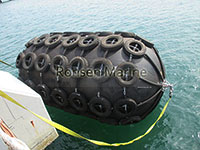
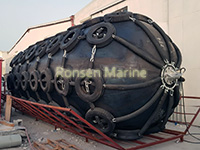
- Buying pneumatic fenders where foam filled fenders are specified
- Assuming IEC 60945 covers MED (it does not—MED adds type-approval wheel mark)
- Mixing 440 V and 690 V auxiliaries without transformer interface in the AMS
- Forgetting that software/firmware version on ECDIS is a class item, not a IT choice
FAQ: Understanding Marine Equipment
Is marine equipment the same as marine machinery?
No. Machinery is the propulsion/power core; equipment is the wider set including safety, navcom and deck gear. They overlap in pumps and generators.
Which IMO conventions govern most marine equipment?
SOLAS (safety), MARPOL (pollution), STCW (crew interface), and the MED for type-approved hardware on EU-related flags.
Do all marine equipment items need class approval?
No—consumables and some auxiliary stores do not. But anything affecting seaworthiness, fire, life saving, navigation or power distribution does.
Why do two similar fenders or switchboards have very different prices?
Difference is usually in foam grade, skin compound, class witness test, redundancy level, and whether firmware/calibration is included.
Takeaway for Buyers and Engineers
Understanding marine equipment is less about memorizing brand catalogs and more about reading the functional-class-standard chain: what the item does, which class society validates it, and which IMO annex forces it onto the BOM. Once that chain is clear, a procurement team can substitute suppliers without breaking the vessel’s certificate tree—and a superintendent can troubleshoot a failure by tracing the system boundary, not just the part number.
👉 When drafting a newbuild spec or a dry-dock upgrade list for 2026–2027, group equipment by system boundary (power / navcom / safety / deck / env), then attach the governing rule and class notation to each line. That single habit prevents most retrofit surprises.

